
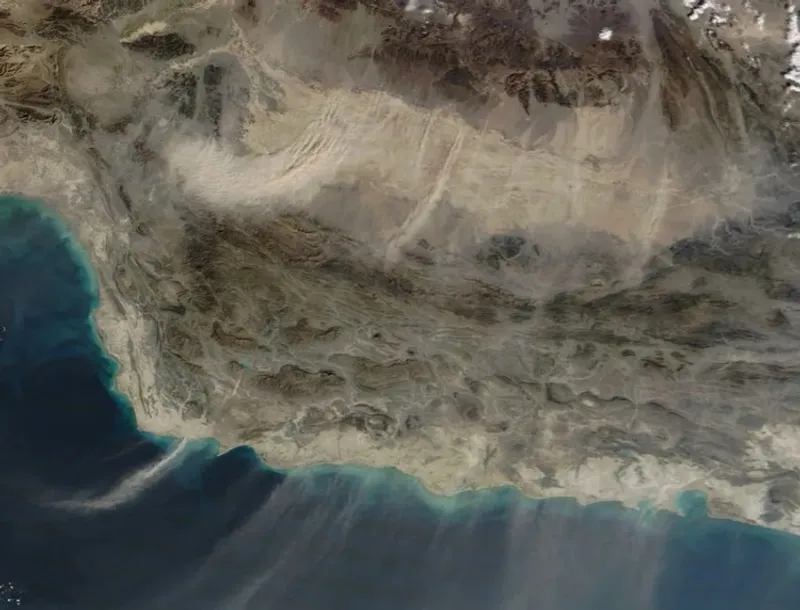
TLDR: Satellite derived geospatial data is increasingly driving US Iran military advantage because it enables precise awareness and targeting. That matters because both countries now treat space based information like territory.
Key Takeaways:
- Geospatial intelligence now acts like infrastructure, since satellite derived information shapes decisions as much as holding land.
- The US Iran struggle reflects a shift where the civil and military uses of space data are dissolving, turning mapping and imagery into strategic weapons.
- As satellite data becomes targeting ready, expect tighter control of space assets, sharper disputes over access, and faster escalation through information advantages.

In the new geography of conflict, whoever sees first and shares least can move the battlefield without firing a shot. Space based data is gaining its own front line.
In the new geography of conflict, whoever sees first and shares least can move the battlefield without firing a shot. Space based data is gaining its own front line.
Q&A
What makes geospatial intelligence so weapon like compared with traditional reconnaissance?
It compresses time between observation and action by delivering location aware measurements that can feed planning, targeting, and battle damage assessment faster than human or purely airborne methods.
How does blurring civil and military space uses change the risk profile for neutral operators?
If commercial imagery, mapping services, or communications can be interpreted as military enabling, operators face higher political pressure, compliance demands, and potential retaliatory targeting of their capabilities.
Why might access to satellite data become a trigger for escalation even without direct strikes?
Information outages, degraded accuracy, or contested attribution can look like preparation for action, especially when both sides rely on similar timelines for targeting and response.
What historical patterns suggest the most likely next step after states weaponize geospatial data?
In prior tech driven conflicts, early advantage pushes adoption of dedicated architectures, including specialized collection, processing pipelines, and hardened data links designed to keep value under attack.
How could future verification and accountability lag behind the speed of spatial targeting?
Even if data provenance tools improve, the tempo of operations can outpace forensic clarity, letting decisions be made on incomplete evidence and complicating de escalation.
Top in Space

FAA clears SpaceX Starfall reentries, betting on space manufacturing

Moon quarantine plan targets Mars sample contamination fears

Scott Wray readies Artemis EVAs for lunar realities

Blue Origin failure adds heat to NASA lunar timeline
No comments yet. Be the first to share your thoughts!