
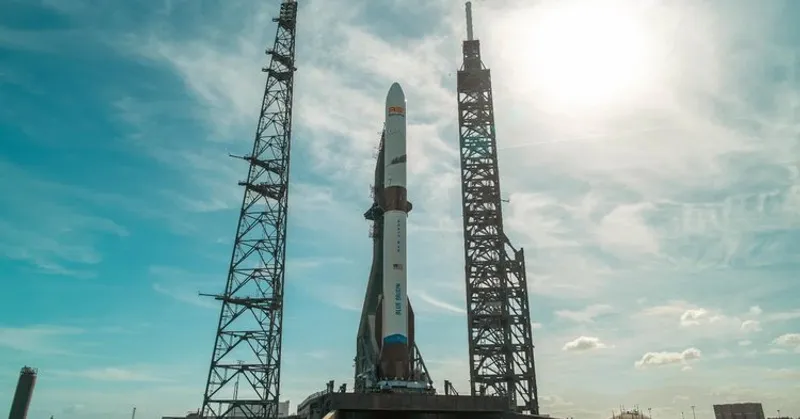
TLDR: CAPE CANAVERAL SPACE FORCE STATION—Blue Origin says damage from the New Glenn explosion at Cape Canaveral Space Force Station pad 36 last week is repairable and plans launches by year end. NASA and Artemis timelines hinge on pad recovery and future lunar lander cargo flights.
Key Takeaways:
- After last week’s pad 36 blast destroyed New Glenn and its transporter erector, Blue Origin relied on a single Florida launch site to keep schedules.
- CEO Dave Limp said propellant farm tanks and the processing hangar survived, and the main support gantry can be repaired in place to resume New Glenn by year end.
- If the cause is not a major BE 4 or design flaw, NASA can accelerate Artemis lander and cargo support milestones instead of waiting out a long redesign.

The explosion turned launch complex 36 into a stress test, but Blue Origin’s quick damage assessment is the more important headline. Space fans will forgive the fireball if the hardware comes back in time and the mystery stays shallow.
The explosion turned launch complex 36 into a stress test, but Blue Origin’s quick damage assessment is the more important headline. Space fans will forgive the fireball if the hardware comes back in time and the mystery stays shallow.
Q&A
What would Blue Origin’s reported timeline signal if the investigation points to a pad side issue?
A pad related fault would mean faster software and hardware changes focused on ground systems, making the end of year launch promise more credible.
Why is the transporter erector switch a big operational lever, even if New Glenn hardware is otherwise intact?
Removing that element could reduce schedule risk and create a smoother path to re integrate the rocket, since teams can validate the new assembly workflow on the pad.
How does pad 36 single site dependence change the stakes for NASA’s Artemis planning?
With one Florida launch pad, a prolonged pad recovery forces cascading delays for Earth orbit testing and lunar cargo, tightening the window for Artemis rendezvous milestones.
What does NASA Administrator Jared Isaacman’s response suggest about how risk gets managed after a major mishap?
It signals NASA is already planning parallel workstreams like accelerated root cause analysis support and recovery planning, not waiting to confirm blame before acting.
If BE 4 is not blamed, how could that affect the broader rocket supplier ecosystem?
A non engine conclusion would reduce uncertainty for United Launch Alliance, since BE 4 is central to Vulcan and would mean fewer knock on effects across other programs.
Top in Space

FAA clears SpaceX Starfall reentries, betting on space manufacturing

Moon quarantine plan targets Mars sample contamination fears

Scott Wray readies Artemis EVAs for lunar realities

Blue Origin failure adds heat to NASA lunar timeline

No comments yet. Be the first to share your thoughts!