
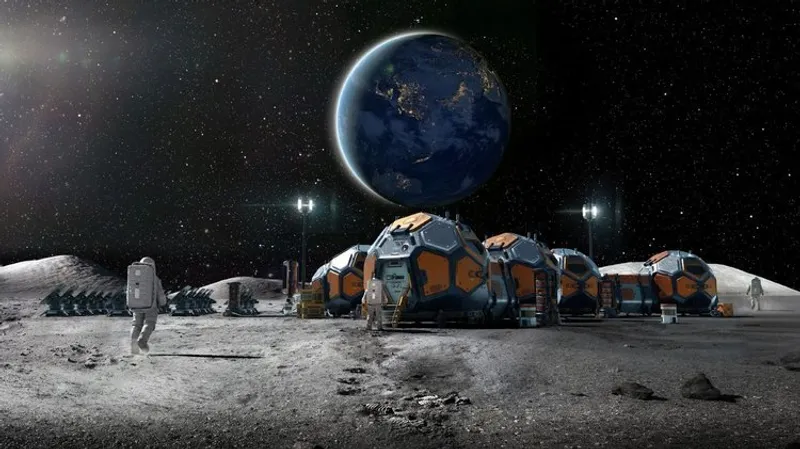
TLDR: STAR, Idaho—Researchers urge a lunar quarantine and research lab for Mars and other extraterrestrial samples to prevent unpredictable back contamination, especially as Artemis expands and global competitors build.
Key Takeaways:
- Planetary protection has not kept pace with the fast space race and rising plans to return extraterrestrial material to Earth for research.
- Frederick Moxley and Anthony Ricciardi propose routing incoming samples through a secure moon based biocontainment facility tended by advanced robots.
- They warn of rebound contamination, pointing to mutated ISS bacterium Enterobacter bugandensis as a caution against assuming back contamination risk is negligible.

It is a very terrestrial worry about alien stuff, just on a cosmic delay. If Earth containment is never perfect, the moon gets pitched as the closest thing to a time out.
It is a very terrestrial worry about alien stuff, just on a cosmic delay. If Earth containment is never perfect, the moon gets pitched as the closest thing to a time out.
Q&A
What operational bottleneck could derail a lunar quarantine approach even if the science makes sense?
Transport reliability. Every additional step from rover cache to lunar lab introduces timing, landing, and handling windows where a procedural failure could matter.
Why does the proposal emphasize robotic handling instead of human sampling on the moon?
Robots reduce exposure pathways and lower the odds of accidental release from human error, which is the same kind of failure planetary protection frameworks try to eliminate.
How would a rebound contamination scenario change how missions design their sterilization and tracking systems?
It would push agencies toward stricter chain of custody, tighter metadata on sample custody conditions, and confirmation testing to detect microbial evolution before any material ever returns.
Could lunar isolation truly replace Earth based containment, or would it just split responsibilities?
Most likely it would split duties. The moon facility becomes a first line firewall, but Earth still needs layers because accidents and uncertain biology never stop at one boundary.
What happens next if multiple countries launch competing moon bases before shared planetary protection rules mature?
Standards could fragment. That increases the odds that samples move under uneven procedures, making international coordination and verification a harder, more urgent problem than building the base itself.
Top in Space

FAA clears SpaceX Starfall reentries, betting on space manufacturing
Scott Wray readies Artemis EVAs for lunar realities

Blue Origin failure adds heat to NASA lunar timeline
Blue Origin targets New Glenn return after pad explosion

No comments yet. Be the first to share your thoughts!