
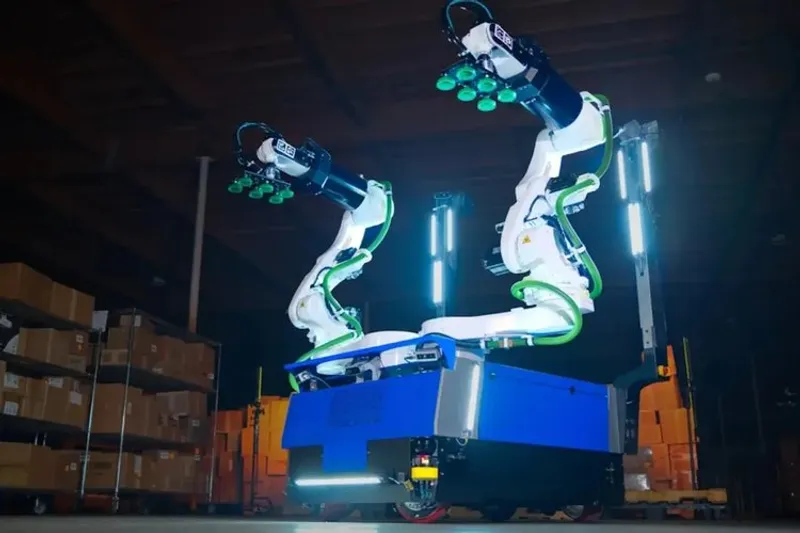
TLDR: SAN JOSE, Calif.—Kawasaki Heavy Industries opened a physical AI development center in San Jose, California, partnering with Nvidia to apply AI to healthcare, mobility, and semiconductors.
Key Takeaways:
- Kawasaki Heavy Industries is leaning into AI that works in real industries, not just headlines about generative risks.
- The new San Jose facility builds practical AI with Nvidia for healthcare, mobility, and semiconductors.
- A hardware backed AI push could speed deployments, while also raising expectations for safety, testing, and measurable results.

While the internet argues over AI chaos, Kawasaki is building the quiet opposite: a room full of engineers turning models into tools factories can trust. San Jose is where promises get stress tested fast.
While the internet argues over AI chaos, Kawasaki is building the quiet opposite: a room full of engineers turning models into tools factories can trust. San Jose is where promises get stress tested fast.
Q&A
How will Kawasaki measure whether this center improves healthcare AI beyond demos and pilots?
Look for tracked outcomes like workflow time saved, clinician adoption rates, error reductions, and compliance benchmarks tied to healthcare use cases.
Why does partnering with Nvidia matter more for deployment than for model research?
Nvidia can connect compute, software stacks, and performance tuning to shorten the path from prototype to production at scale.
What happens if generative AI keeps outpacing guardrails faster than new industrial standards can catch up?
Industrial teams may shift toward constrained systems, retrieval plus validation, and tighter audit trails, because regulators and liability eventually decide the timeline.
Could this center pull Kawasaki closer to chipmakers and device makers, changing who drives the roadmap?
Yes. If semiconductor and mobility projects depend on specific acceleration and tooling, ecosystem partners can gain influence over priorities.
What precedent suggests that physical AI hubs outperform remote research for enterprise adoption?
Historically, co located engineering teams speed integration with hardware, data pipelines, and compliance workflows, which are the real bottlenecks for adoption.
Top in AI

YouTube reshuffles AI labels to surface disclosure upfront
Nvidia Rubin CPX stalls as Groq integration tightens supply math

YouTube boosts AI labels as detection automation ramps

ElevenLabs brings Stan Lee voice, likeness back via licensing pact
No comments yet. Be the first to share your thoughts!