
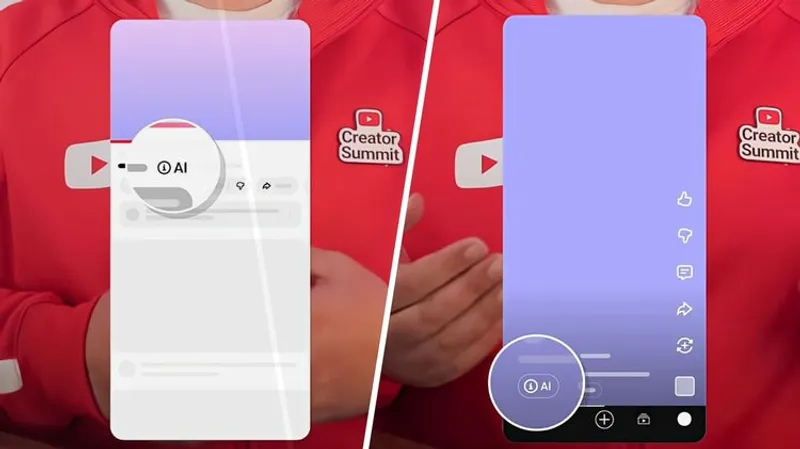
TLDR: YouTube will place AI disclosure labels more prominently below the player for long videos and as overlays for short videos. It also plans new internal signals to auto label significant photorealistic AI, with permanent disclosures for Veo, Dream Screen, or fully generative C2PA metadata.
Key Takeaways:
- YouTube says it heard feedback from users struggling to spot AI in photorealistic uploads.
- Long form labels shift directly below the player, while short form labels appear as overlays on the video itself.
- New internal signals may auto label content, but creators can correct errors in YouTube Studio unless disclosures stay permanent for Veo, Dream Screen, or C2PA full generative metadata.

Bigger labels are a welcome nudge, but the real story is YouTube trying to outpace AI forensics with internal signals. If creators forget to disclose, the platform will now remember for them.
Bigger labels are a welcome nudge, but the real story is YouTube trying to outpace AI forensics with internal signals. If creators forget to disclose, the platform will now remember for them.
Q&A
How will YouTube handle mistakes when internal signals tag a video as AI but the creator disputes it?
YouTube says creators can update disclosure status in YouTube Studio if a label is wrong. The tough part is how quickly corrections propagate to viewers who already saw the original label.
Why does YouTube treat disclosures as permanent for some content types like Veo and Dream Screen?
Those sources use YouTube's own AI tools, and YouTube also points to C2PA metadata. Permanent disclosures reduce gaming the system by removing the option to later deny what was already encoded.
Could more prominent labels unintentionally train viewers to expect AI rather than assess quality?
If warnings become a consistent visual element, viewers may treat them like a trust badge or a skip cue. That can distort how audiences judge editing, context, and intent.
What happens to creators who rely on subtle AI edits that fall below YouTube's threshold for automatic labeling?
They may still need to manually disclose when they use realistic AI. If their changes are not deemed significant by internal signals, labels may depend on creator compliance rather than automatic detection.
How does this change fit into the longer arms race between synthetic media and platform trust systems?
Labeling shifts viewer behavior, but it does not stop generation. YouTube is moving from manual disclosure toward automated detection, which mirrors past platform attempts to moderate spam and misinformation with increasingly machine based signals.
Top in AI

YouTube reshuffles AI labels to surface disclosure upfront

Nvidia Rubin CPX stalls as Groq integration tightens supply math

ElevenLabs brings Stan Lee voice, likeness back via licensing pact
PostHog trains AI models using customer data

No comments yet. Be the first to share your thoughts!