
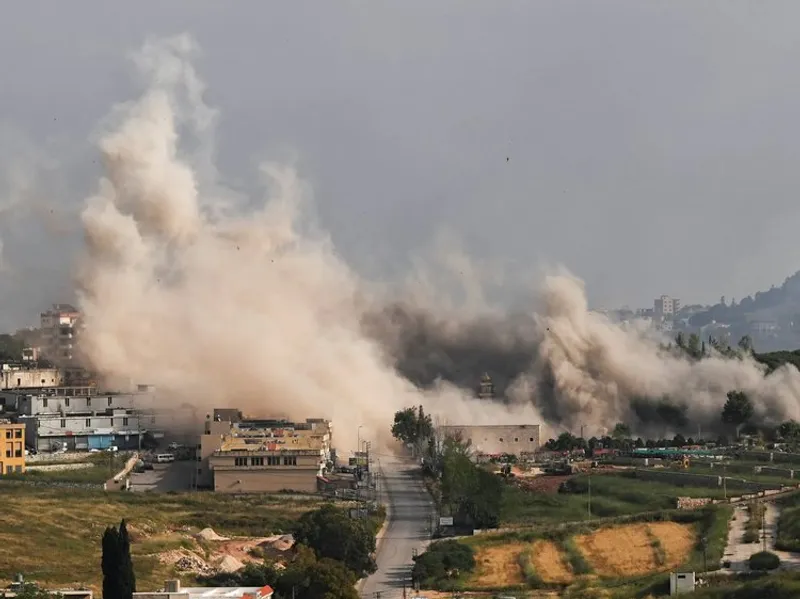
TLDR: BEIRUT—Israeli strikes across southern Lebanon killed at least 31 people and triggered dozens of displacement orders as ground forces pushed deeper. Iran also accused the United States of violating a ceasefire with strikes near the Strait of Hormuz, complicating US Iran diplomacy.
Key Takeaways:
- Southern Lebanon saw mass flight as Israeli ground and air actions intensified alongside new displacement orders for villages and towns.
- Iran called Monday US strikes near the Strait of Hormuz a “gross violation,” while the US said it targeted missile sites and mine laying efforts.
- Diplomatic trust eroded on multiple fronts, pushing ceasefire talks into sharper political and military risk for Lebanon and Iran.

The battlefield is acting like a negotiation bully. Every strike in Lebanon and every claim near Hormuz makes the ceasefire sound less like a promise and more like a pause.
The battlefield is acting like a negotiation bully. Every strike in Lebanon and every claim near Hormuz makes the ceasefire sound less like a promise and more like a pause.
Q&A
If Israel expands its “security zone,” how might Hezbollah adjust tactics to avoid being pressured into a static front?
Hezbollah is likely to lean harder on drones and dispersal methods, using smaller, mobile attacks to keep Israel from benefiting from territorial gains.
Why would Iran and the US accuse each other of violating the same ceasefire instead of treating it as an operational misunderstanding?
Both sides gain leverage by framing violations as intentional, since domestic politics and deterrence messaging reward a tougher narrative over quiet repair.
What happens to Strait of Hormuz risk if talks pause while strikes continue on both shores?
Leverage in key maritime chokepoints can shift fast, raising chances of miscalculation involving ships, mines, or retaliatory signals that escalate beyond leaders’ control.
Could Iran’s push for releasing $24 billion in frozen assets become a bargaining chip even while military exchanges intensify?
Yes, asset release can function as a partial off ramp, but each new strike risks turning it into a delayed promise rather than a stabilizer.
How might US aircraft deployments in Israel change the calculus for de escalation with Iran?
A heavier visible posture can deter some moves, but it also signals readiness for rapid response, making leaders feel less urgency to compromise.



No comments yet. Be the first to share your thoughts!