
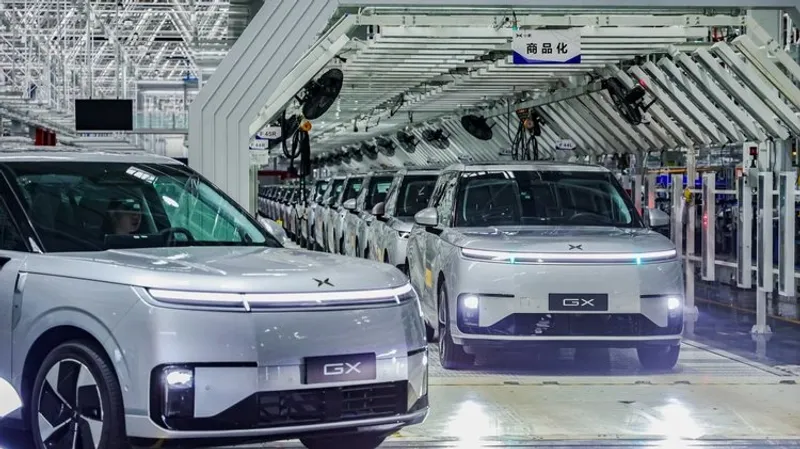
TLDR: CHINA—Xpeng started mass producing autonomous cabs using its own chips, escalating competition with Tesla’s FSD push in China and intensifying price war pressure.
Key Takeaways:
- Xpeng and Tesla are locked in a self driving race as China’s EV market keeps leaning toward aggressive pricing.
- Xpeng mass production for driverless cabs runs on its own chips while Tesla expands FSD in China and Nio pushes back on price wars.
- Driverless scaling plus software rollout could reshape who captures high margin rides, while price pressure squeezes weaker EV economics.
- EV roundup also includes themes like BEV demand from fuel shocks and Chery’s push to sell 1 million cars abroad.

Self driving is turning into an operations game, not just a demo. If Xpeng and Tesla can scale safely and profitably, the taxi industry becomes the next battleground for China EV dominance.
Self driving is turning into an operations game, not just a demo. If Xpeng and Tesla can scale safely and profitably, the taxi industry becomes the next battleground for China EV dominance.
Q&A
What has to go right for autonomous cabs to move from pilots to profitable fleets?
Consistent safety performance, reliable mapping and weather handling, and unit economics that beat subsidized rides, not just software benchmarks.
Why does Tesla benefit from launching FSD in China even when local rivals match the hardware push?
Software adoption can compound through driver behavior data, fleet learning, and faster feature rollouts once regulatory clearance and service coverage are secured.
How might Nio’s price war stance change investor expectations across the China EV sector?
Markets may start rewarding cost discipline and faster margin recovery, not just vehicle volume, pushing less efficient brands to restructure.
Could Xpeng’s in house chips reduce costs enough to withstand margin pressure from price wars?
If chip supply and performance yield improve, it can lower compute costs per vehicle and help sustain margins during heavy promotional pricing.
What happens if driverless cabs face slower real world rollout than expected?
Capital spending could outrun revenue, shifting momentum back to mainstream vehicle sales and forcing companies to rethink how quickly software monetization arrives.



No comments yet. Be the first to share your thoughts!