
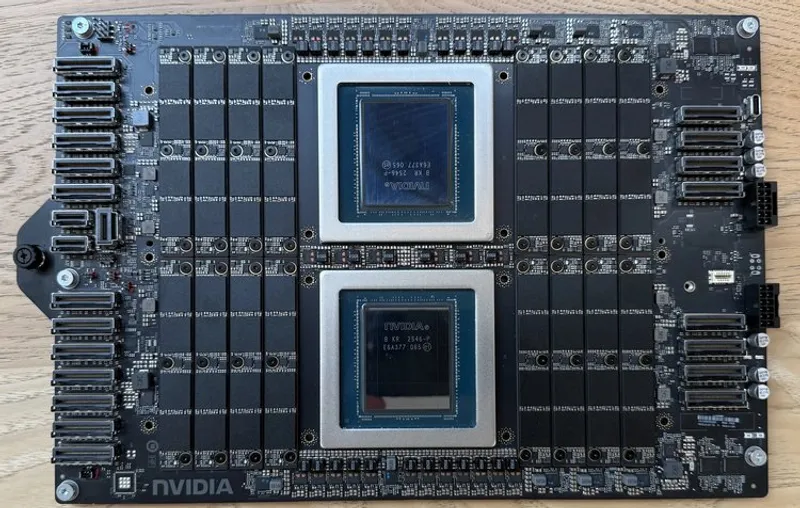
TLDR: SANTA CLARA, Calif.—Nvidia’s Vera ARM data center CPU with Olympus cores delivered standout early Linux benchmarks, but power and frequency monitoring was restricted for now.
Key Takeaways:
- Nvidia plans Vera for agentic AI racks, including NVL72 Vera Rubin hosts, after a later year ramp and Linux upstream readiness.
- Vera pairs 88 Olympus cores with Armv9.2, FP8, 2MB L2 per core, a 164MB L3, LPDDR5X up to 1.2TB/s, and 450W peak TDP.
- Early results look unusually competitive versus Intel and AMD x86_64, but missing power and frequency measurements leave efficiency conclusions pending.

Nvidia is doing the rare thing: shipping CPU excitement before full hardware ramp, thanks to early compiler and upstream Linux progress. The catch is that the one metric people will obsess over, power behavior, is off limits for this first look.
Nvidia is doing the rare thing: shipping CPU excitement before full hardware ramp, thanks to early compiler and upstream Linux progress. The catch is that the one metric people will obsess over, power behavior, is off limits for this first look.
Q&A
Why would Nvidia limit power and frequency monitoring during early Vera benchmarks?
The company is still tuning power management upstream, so forcing measurement could mislead early readers and complicate validation against future production chassis behavior.
If Linux support is already in place, what still needs work before wide deployment?
Beyond baseline drivers, power management details such as CPPC related behaviors still require upstream refinement, especially for accurate performance per watt claims.
How might Olympus compiler maturity change what customers can do with Vera quickly after shipping?
With GCC 16.1 and LLVM Clang 21 support, developers can start producing optimized binaries sooner, reducing the usual lag between new cores and real world software throughput.
What does PCIe Gen 6 and CXL 3.1 support suggest about Vera’s target server ecosystems?
It signals a focus on modern accelerator attachment and memory expansion strategies, which can matter as agentic AI stacks evolve toward larger and more dynamic data movement.
If early tests favor Nvidia allowed workloads, how will that shape the debate versus x86_64?
Benchmarks can overfit to specific pipeline patterns, so broader third party suites later will decide whether Vera keeps its advantage across mixed cloud workloads.





No comments yet. Be the first to share your thoughts!