
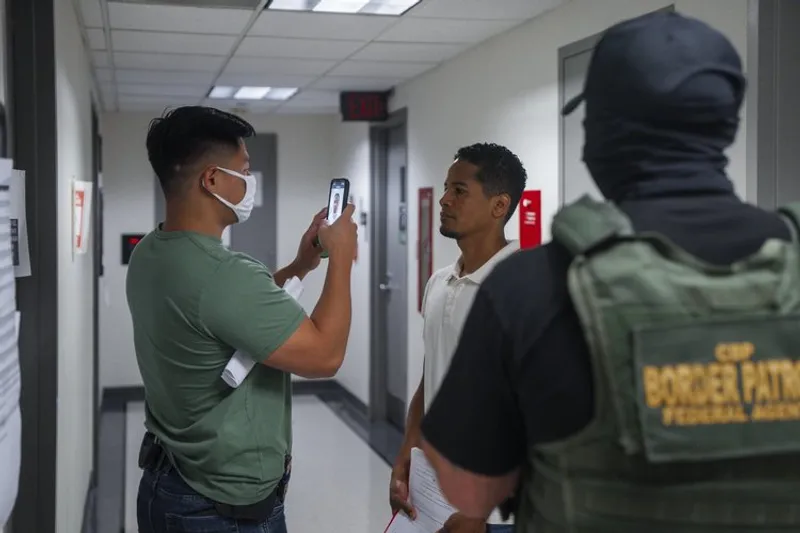
TLDR: WASHINGTON—ICE and DHS awarded BI2 Technologies a $25 million no bid contract for more than 1,500 iris scanners and access to stored data.
Key Takeaways:
- DHS links iris recognition to identity checks during immigration enforcement as its budget fuels more biometric tools.
- The agency sought over 1,500 iris scanners plus app access and a database for stored scans under a $25 million no bid contract.
- Privacy experts warn expanded databases and detention driven collection could enable surveillance without clear oversight or strict targeting.

Fast identification is the pitch. The uneasy part is where the data ends up and who gets to say what happens after the scan.
Fast identification is the pitch. The uneasy part is where the data ends up and who gets to say what happens after the scan.
Q&A
If iris scans are meant to confirm identity, what safeguards would actually prevent data from being reused for broader surveillance?
Clear rules on retention limits, access controls, audit trails, and prohibitions on secondary uses would be the baseline, paired with independent oversight.
How might DHS justify linking iris databases to other ICE systems like location tracking or license plate readers in practice?
Agencies often frame it as interoperability for faster casework, but that creates incentives to aggregate data and expand the scope of who gets scanned.
Why does the no bid structure matter beyond speed and cost?
No bid awards reduce competitive pressure and can weaken scrutiny of technical security, data handling practices, and long term obligations.
What happens when technology that works for identification is paired with detention based collection?
The power imbalance changes consent dynamics, making collection feel less like verification and more like extraction tied to enforcement outcomes.
Could iris scanning become a standardized intake tool the way fingerprints are in jails?
That pathway is plausible, especially if agencies treat biometric confirmation as a time saving substitute for slower checks, but courts and policies would be the main brakes.





No comments yet. Be the first to share your thoughts!