
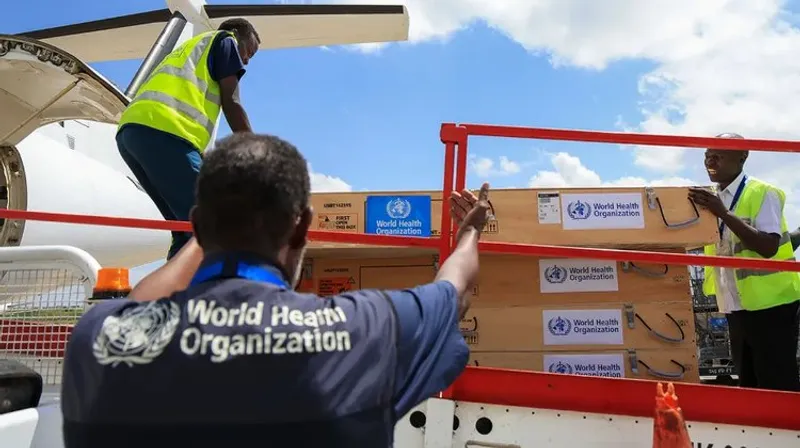
TLDR: KENYA—The Trump administration will quarantine and treat Americans exposed to Ebola at a Kenya facility, with U.S. public health officers staffing it.
Key Takeaways:
- The plan targets Americans who faced Ebola exposure in the region, not local residents, shifting U.S. care abroad to Kenya.
- An administration official said public health service officers are preparing for rapid deployment to staff the new quarantine and treatment facility.
- The Kenya site suggests the U.S. expects ongoing exposure risk and wants tighter isolation and monitoring to prevent spread at home.

Quarantining exposed Americans in Kenya turns the spotlight into logistics as much as medicine. The country building the facility becomes an unplanned frontline in a fight that is, at its core, about timing and trust.
Quarantining exposed Americans in Kenya turns the spotlight into logistics as much as medicine. The country building the facility becomes an unplanned frontline in a fight that is, at its core, about timing and trust.
Q&A
What does rapid U.S. staffing of a Kenya facility signal about the timeline the administration expects?
It implies the administration is planning for immediate, recurring arrivals of exposed Americans, rather than a slow, case by case response.
How could isolating only Americans abroad affect Ebola risk perceptions in the U.S. public?
It may reassure some Americans while raising questions for others about whether exposure assessments are consistent and how quickly symptoms would be detected.
Why would the U.S. choose a treatment and quarantine site abroad instead of relying on domestic facilities from the start?
Distance shortens the time exposed people spend in transport zones and can speed isolation, even though it transfers risk management to another country.
What operational challenges usually define whether a quarantine facility works: space, staffing, protocols, or supply chains?
Protocols and supplies often matter as much as bed capacity, because PPE, infection control, diagnostics, and staffing continuity decide whether care can be delivered safely.
Historically, what tends to happen next after governments announce quarantine facilities for exported patients?
Expect expanded screening criteria, more frequent updates on exposure lists, and scrutiny of how quickly individuals move from observation to isolation if symptoms appear.



No comments yet. Be the first to share your thoughts!