
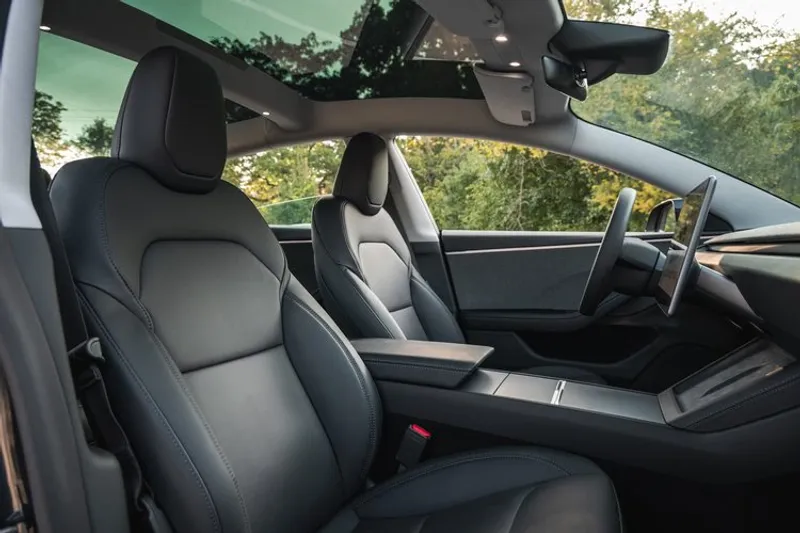
TLDR: Tesla patents a roof that uses perforated and sandwich glass to diffuse cooler air, plus a system that pumps hot air out of the cockpit, easing A C load. If built, it could improve battery range in sunny conditions by reducing cabin cooling demand.
Key Takeaways:
- Tesla wants better cabin thermal control ahead of hotter months, where panoramic glass roofs can magnify sun heat and strain air conditioning.
- One patent pairs regular glass with a honeycomb center and perforated glass to act like a roof diffuser, while another moves hot air out of the cockpit.
- Lower A C workload could translate into more range per kWh, but mass production is uncertain and the honeycomb structure adds manufacturing complexity.

It is an underappreciated kind of car tech: turning sunlight problems into airflow design. If Tesla can manufacture it cheaply, your panoramic view could finally come with shade, not sweat.
It is an underappreciated kind of car tech: turning sunlight problems into airflow design. If Tesla can manufacture it cheaply, your panoramic view could finally come with shade, not sweat.
Q&A
What has to go right for Tesla to move from patent to real cars?
The company would need a mass producible roof structure that keeps cost and weight near current standards while maintaining reliable airflow and HVAC control across climates.
Why does a roof that cools by diffusing air matter more than stronger air conditioning?
Diffusion can reduce the need for aggressive A C output by improving how heat settles and moves inside the cabin, cutting energy spikes that hurt efficiency.
Could hot air pumping conflict with passenger comfort during sudden temperature swings?
Tesla would likely need smart blending of suction and roof diffusion so the system responds fast without creating drafts or uneven temperatures across seating rows.
How might this affect future glass roof options across Tesla models and competitors?
If it works, panoramic roof demand could rise because the feature shifts from a heat burden to a managed HVAC component, pressuring rivals to match the efficiency payoff.
What happens to cabin heating performance in winter, according to the patent?
The patent suggests the perforated roof could also be integrated for warming or heat transfer, but the specific strategy for comfort and energy use is still unclear.



No comments yet. Be the first to share your thoughts!