
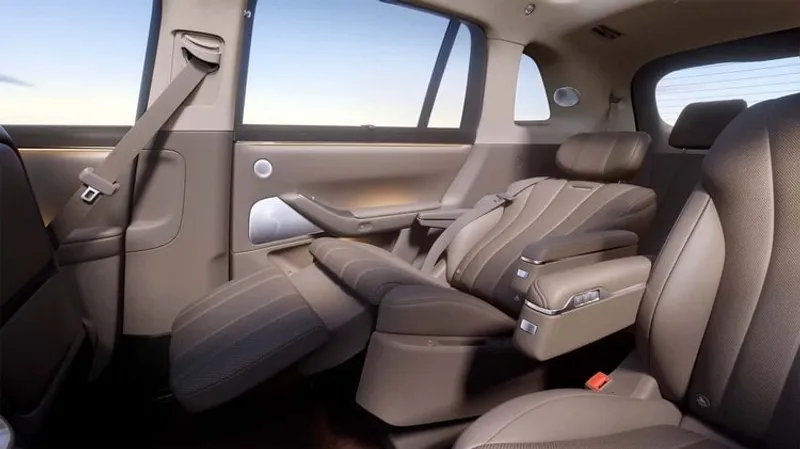
TLDR: BEIJING—China is tightening EV rules after crash linked scrutiny of hidden handles, yoke steering, and heavily reclining zero gravity seats, warning safety may fail in semi recline.
Key Takeaways:
- China’s EV boom helped popularize screen heavy, lounge-like interiors, plus easy entry features and sleep friendly seating.
- The Ministry of Industry and Information Technology warned that semi reclined zero gravity seats may not guarantee occupant safety and highlighted concerns over belts and airbag timing.
- If China adds more limits on controls and default acceleration, global EV design could shift toward more traditional ergonomics and measurable crash safety.

For years, Chinese EVs sold a future you could nap in. Now regulators are treating that comfort as a liability, and other markets will notice.
For years, Chinese EVs sold a future you could nap in. Now regulators are treating that comfort as a liability, and other markets will notice.
Q&A
How might semi reclined seating rules change everyday EV use, like commuting naps and carpool trips?
Drivers who rely on heavy recline for comfort may switch to fewer reclined positions, adjust habits, or choose models with more conventional seat and belt geometry.
Why does a safety issue with seatbelts and airbags matter more when the interior invites recline behavior?
The more often occupants sit in a near bed posture, the more often crash performance must work for that exact posture, not just an ideal upright position.
What could make hidden door handles harder for regulators to manage than obvious mechanical parts?
Door opening depends on power, sensors, and crash conditions, so regulators face harder questions about reliability when electricity and automation behave differently in crashes.
If yoke steering is linked to regaining control, what design paths could replace it without losing the futuristic look?
Automakers may keep the styling while moving to more ergonomic shapes, add assist tuning, or require clearer driver grip geometry and tighter validation for control recovery.
How could braking light rules for regenerative deceleration affect driver expectations and accident risk?
Consistent brake light behavior sets expectations for following drivers, so clearer signaling can reduce rear end crashes when regen slows the car like brake use.



No comments yet. Be the first to share your thoughts!