

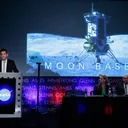
TLDR: WASHINGTON—NASA unveiled a three phase plan for a South Pole lunar base, starting 2026 robots and a Blue Origin Blue Moon Mark 1 test. It replaces Gateway and aims to speed Artemis by focusing on surface infrastructure.
Key Takeaways:
- NASA pivoted from Gateway to a South Pole surface plan, using robots first to cut costs and accelerate Artemis.
- Phase one runs 2026 to 2029 with at least 25 missions and 21 landings, including Blue Origin Blue Moon Mark 1 Endurance in fall 2026.
- Phase two and three scale power, habitats, and logistics so astronauts can rotate between semipermanent operations and stable infrastructure.

This plan treats the Moon like a construction site, not a postcard. Expect learning flights now, and real staying power later, with Artemis timelines pressured to keep up.
This plan treats the Moon like a construction site, not a postcard. Expect learning flights now, and real staying power later, with Artemis timelines pressured to keep up.
Q&A
Why does NASA think the South Pole beats an orbital station like Gateway for long term presence?
Surface access lets NASA test life support relevant logistics, landing cadence, and power delivery under harsh terrain, while Gateway remains a transit node with fewer direct habitation constraints.
What could break the schedule if Blue Origin’s Blue Moon Mark 1 Endurance test underperforms?
A late or failed validation of descent and navigation would force redesign work and delay the manned Blue Moon version targeted around 2028, tightening downstream integration across rovers, habitats, and comms.
How does running 21 landings before any astronauts change risk compared with earlier crew first strategies?
It front loads failure data on landing stability, routing, and payload handling, so later human missions inherit a tested playbook instead of guessing through first contact with the environment.
If NASA expects about 38 tons of cargo annually in phase three, what supply chain bottleneck matters most?
Not just launch capacity, but sustained delivery cadence to the South Pole, including surface power needs, comms links, and on site transfer time between landings and maintenance.
What does the shift away from Gateway signal about US space partnerships and budgets?
NASA is betting that public private surface delivery and infrastructure work can deliver more measurable progress per dollar than maintaining a long term orbital rendezvous architecture.




No comments yet. Be the first to share your thoughts!