
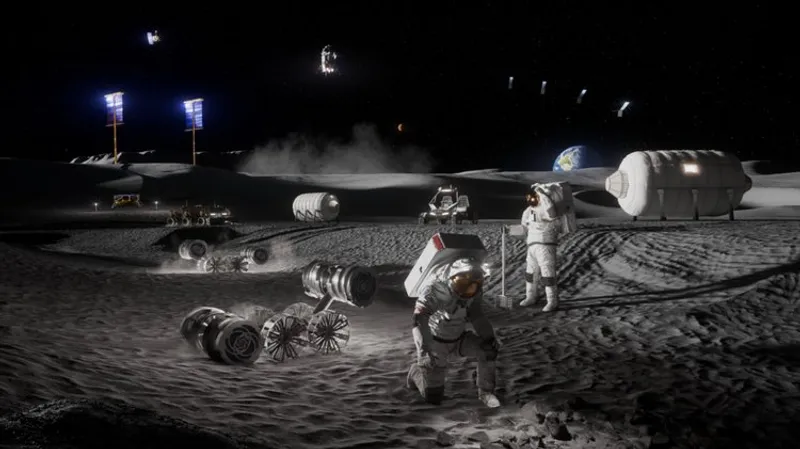
TLDR: CAPE CANAVERAL, Fla.—NASA outlined the first phase of a lunar base, awarding hundreds of millions of dollars in contracts for Blue Origin landers, buggies, and MoonFall drones, aimed at early Artemis 2028 landings. The plan pushes robotics buildup ahead of astronauts to seed science, a lunar economy, and later long stays.
Key Takeaways:
- NASA moves fast, mapping a south pole moon base after Artemis II’s high speed lunar flyaround and ahead of Artemis III docking practice.
- Blue Origin will deliver a pair of landers for moon buggies near the lunar south pole built by Astrolab and Lunar Outpost, while Firefly Aerospace will send the first drones.
- The staged roadmap reaches permanent infrastructure from 2029 into the early 2030s and permanent habitats in the 2030s, with MoonFall drones outlining areas for reciprocity.

The moon base pitch is starting to look less like a dream and more like a supply chain. NASA is betting that robots will do the heavy lifting first, so humans can arrive to something that already feels lived in.
The moon base pitch is starting to look less like a dream and more like a supply chain. NASA is betting that robots will do the heavy lifting first, so humans can arrive to something that already feels lived in.
Q&A
What could delay NASA’s moon base hardware from reaching the surface before Artemis astronauts arrive?
Schedule risk sits in launch timing, lander readiness, and early operations on the lunar south pole. If any delivery slips, the robotics setup meant to precede crew stays could compress training and surface checkout windows.
Why target the lunar south pole with buggies and drones instead of starting farther from potential constraints?
The south pole is a magnet for mission value because of lighting and resource prospects, but it also demands careful navigation. A drone marked perimeter like MoonFall suggests NASA wants safer, repeatable area control where conditions can be unforgiving.
How does using drones as boundary markers shift diplomacy compared with keeping everything inside one fencing concept?
MoonFall is a signal system that can acknowledge nearby activity without needing physical barriers. That matters because multiple nations and private actors will likely operate around the same region, and visible boundaries can make coordination more practical.
What happens if Artemis III or the landing timeline slips, given the plan expects an increasingly robot driven buildout?
Robots can still gather data and prep sites, but a crew landing slip changes how quickly NASA can validate long range human procedures. The result could be more autonomous operations for longer, plus extra integration work for habitats and surface logistics.
Historically, why do ambitious moon programs often shift from grand habitats to smaller phased infrastructure?
Complex systems rarely mature on the first try, and phased rollouts reduce risk by separating payload delivery from habitation validation. NASA’s multi phase structure mirrors that pattern: first prove surface operations, then scale power and permanent infrastructure.



No comments yet. Be the first to share your thoughts!