
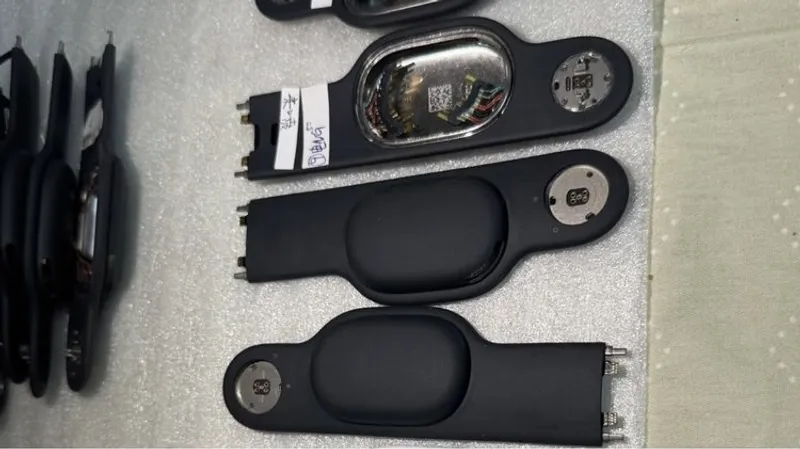
TLDR: Leaked photos from X account LusiRoy8 show dark finished Apple Vision Pro components, suggesting an upcoming all black Vision Pro 2. The leak adds fuel for consumers while Apple prioritizes AI smart glasses development.
Key Takeaways:
- Background: Apple Vision headset roadmap now competes with AI smart glasses, while leaks keep a second generation in play.
- Main fact: Photos appear to show power strap and audio pod parts matching existing Vision Pro designs, but in a dark finish.
- Meaning: Even if the look is real, Apple shifting teams to smart glasses and Siri work could push any release out years.
- Context tie in: Earlier leaks pointed to a thinner Vision Air concept using titanium structural changes and a Midnight exterior.

Black hardware is easy for Apple to sell and harder to ship. For now, this looks like a prop from the future, while the real heavy lifting moves to smart glasses and AI assistants.
Black hardware is easy for Apple to sell and harder to ship. For now, this looks like a prop from the future, while the real heavy lifting moves to smart glasses and AI assistants.
Q&A
If Apple already has dark color experiments, what would make an all black Vision Pro more than a cosmetic refresh?
A meaningful shift would need new materials, weight changes, or a revised industrial design that improves comfort and battery life, not just a finish swap.
Why do leaked accessory parts matter even when the headset launch date is uncertain?
Accessory and module compatibility often signals component readiness, which can hint at production plans, supply chain timing, and internal design lock.
How does Apple pausing Vision headset development change what a buyer should expect from any later successor?
It raises the odds that a follow up could arrive later with AI focused upgrades, but with slower iteration cycles and fewer incremental hardware releases.
What does the Vision Air titanium idea imply about Apple’s priorities in mixed reality?
It suggests Apple was exploring comfort and portability breakthroughs, likely to make always on usage practical, not just to improve display or tracking.
If smart glasses become the center of the product strategy, how could Vision Pro hardware still benefit indirectly?
Shared software stacks, Siri upgrades, and spatial interface lessons can transfer, improving user experiences across both categories even if the headset cadence slows.



No comments yet. Be the first to share your thoughts!