
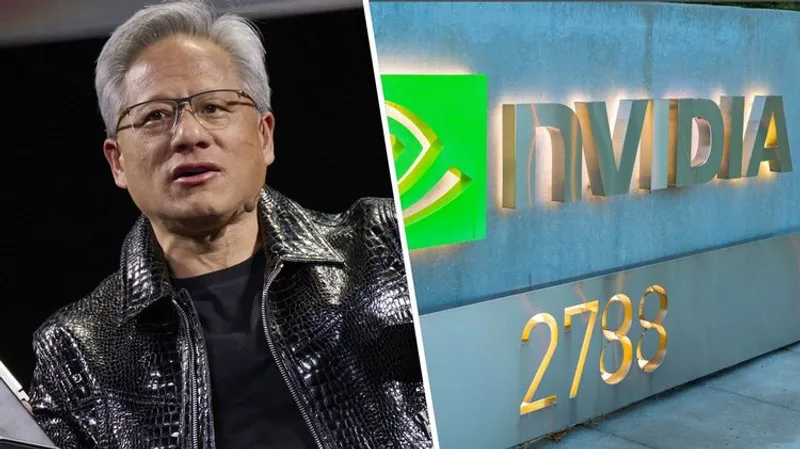
TLDR: TAIPEI—Jensen Huang said Nvidia plans $150 billion yearly investment in Taiwan, plus a costly HQ and jobs. He framed Taiwan as AI’s epicenter.
Key Takeaways:
- Nvidia is leaning harder on Taiwan’s chip ecosystem alongside TSMC, after earlier spending of 10 to 15 billion annually.
- At a Taipei launch event, Huang said Nvidia spending will jump from about 100 billion to 150 billion each year, with a new HQ planned.
- The investment deepens Taiwan’s AI supply chain power while widening the contrast with Nvidia’s shrinking China push under export limits.

Nvidia is betting that AI supply chains live where manufacturing does, not where hype travels. Taiwan just became the company’s loudest commitment, and China just got quieter by contrast.
Nvidia is betting that AI supply chains live where manufacturing does, not where hype travels. Taiwan just became the company’s loudest commitment, and China just got quieter by contrast.
Q&A
What could Nvidia’s Taiwan spending surge change for global AI chip supply timelines?
If Nvidia expands its Taiwan footprint faster than peers, it can secure packaging, systems assembly, and related capacity sooner, tightening lead times for new AI hardware launches.
Why does Huang’s public praise of TSMC matter beyond branding?
It signals Nvidia’s reliance on a specific production pipeline, which can influence negotiating leverage, long term planning, and capacity prioritization during demand spikes.
What tension might appear when Nvidia’s biggest investment is framed as unstoppable, but timelines still depend on construction and approvals?
Even with aggressive budgets, permitting, workforce scaling, and vendor lead times can slow site readiness, forcing Nvidia to balance near term procurement with longer term integration.
How does the Taiwan build compare to Nvidia’s China strategy in practical terms?
Taiwan investment suggests growing operational depth where chips get packaged and systems get built, while China faces tighter market access, limiting how much Nvidia can expand locally.
If AMD also accelerates Taiwan spending, what happens to competition for local partners and talent?
Local suppliers and skilled labor can become bottlenecks, raising the value of long term contracts and pushing companies to lock in capacity before others crowd in.



No comments yet. Be the first to share your thoughts!