
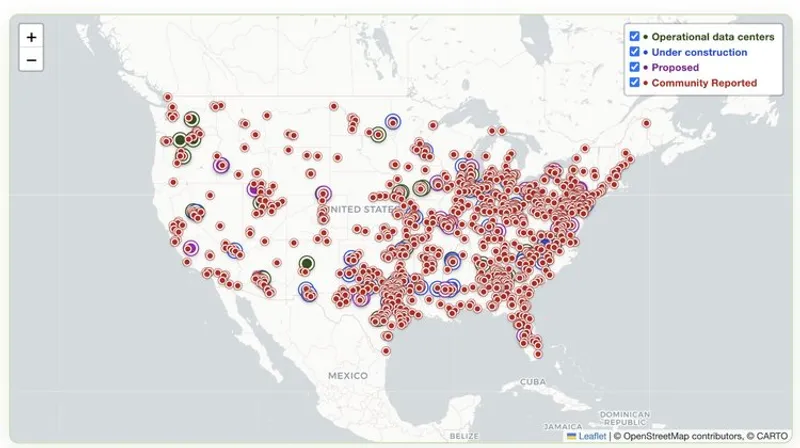
TLDR: SULFUR SPRINGS, Texas—Erin Brockovich launched a crowdsourced AI data center map for US concerns and reports, many from Texas. The 2,716 reports highlight water, electricity costs, and health fears.
Key Takeaways:
- Brockovich turns her environmental playbook toward AI infrastructure, inviting community reporting on operational and under construction sites.
- The map has 2,716 reports, with 612 from Texas including 297 from Sulfur Springs, tied to MSB Global's 3 gigawatt, 30 building plan.
- Residents prioritize water risks first, then electricity and health worries, while utilities and lawsuits intensify pressure on developers and regulators.

Julia Roberts fans get a real world remix. Brockovich is putting dots on the map so communities can pressure the people building behind the abstract promise of AI.
Julia Roberts fans get a real world remix. Brockovich is putting dots on the map so communities can pressure the people building behind the abstract promise of AI.
Q&A
How might a crowdsourced map change the balance between developers and local residents?
It can turn scattered complaints into trackable patterns regulators and courts can scrutinize, strengthening timelines, locations, and risk narratives beyond individual testimony.
If some reports are rumors or proposals, how will the project avoid being dismissed as unverified noise?
The site can separate confirmed operational sites from community submitted claims, and pair dots with documentation that shows permits, construction signals, or utility filings.
Why do water concerns top the list even though electricity and health are also at stake?
AI facilities compete with daily human needs, so water shortages feel immediate and local, while electricity and health impacts can arrive later and are harder to trace to one operator.
What happens to electricity upgrade costs if utility regulators respond to public pressure?
Utilities may face more hearings and scrutiny over rate hikes, potentially slowing projects, shifting who pays, or forcing mitigation commitments tied to demand growth.
Could Brockovich's earlier groundwater work shape how this new effort gains traction?
Her prior campaign against PG&E shows how intensive investigation can convert environmental harm into legal leverage, and community reporting could supply leads for similar accountability.





No comments yet. Be the first to share your thoughts!