
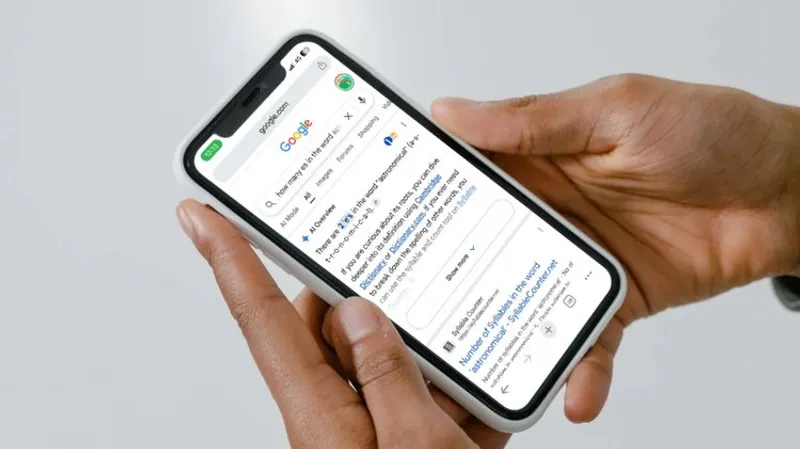
TLDR: Google AI Overviews miscounted the letter e in astronomical, landing wrong spelling results again. People are noticing on social media.
Key Takeaways:
- Google AI Overviews launched in 2024 with wild hallucinations, then improved accuracy while still failing basic checks.
- A Gemini powered Overviews answer to “How many e’s are in the word astronomical” claimed 2, but testers say the count is higher.
- The miss highlights how tokenization limits letter by letter logic, which could keep eroding trust and clicks.

It is getting harder for Google to call this “helpful” when the summary itself cannot pass a spelling warmup. The scary part is not the mistake, it is how convincingly it is delivered.
It is getting harder for Google to call this “helpful” when the summary itself cannot pass a spelling warmup. The scary part is not the mistake, it is how convincingly it is delivered.
Q&A
If AI Overviews can get spelling wrong, what happens when searchers ask for exact figures, names, or legal terms?
They face the same failure mode: the model may generate plausible text without reliable character level precision, which can quietly mislead users.
Why does better overall accuracy not automatically fix spelling and counting tasks?
Most gains improve pattern level prediction, but tokenization still means the model treats text as units, not literal letters, unless forced to do strict breakdowns.
What design change would most directly help letter counting in AI summaries?
A hybrid approach like delegating counting to deterministic string tools could enforce character accuracy instead of relying on probabilistic generation.
How could repeated spelling failures change publisher incentives and traffic patterns?
If users do not trust the snippets, they may click more for verification, but if they do not notice the error, publishers can keep losing visits.
What precedent does this resemble from earlier search and automation tools?
It mirrors past bot and preview era issues where convenience came with accuracy tradeoffs, forcing users to develop skepticism toward fast answers.





No comments yet. Be the first to share your thoughts!