
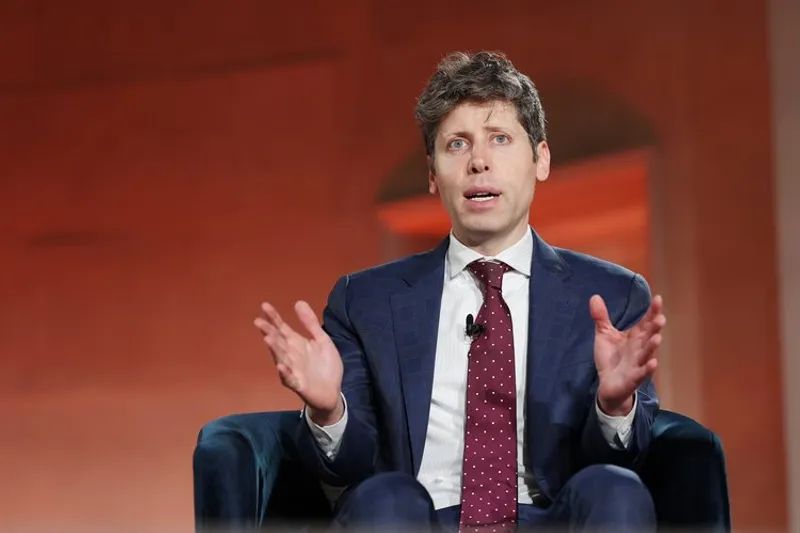
TLDR: SYDNEY—Sam Altman says AI has not wiped out white collar jobs as fast as he predicted, after his Slack and email AI replies felt too inhuman. He calls the difference the human part of work that machines cannot easily replace.
Key Takeaways:
- Altman previously warned of an entry level jobs apocalypse, but he now sees a slower hit to white collar work.
- At a Commonwealth Bank of Australia conference in Sydney, Altman said he was delighted to be wrong after testing AI autoreplies for Slack and email.
- His lesson is that the human part of work still matters, even as OpenAI moves toward a confidential U.S. IPO at a potential $1 trillion valuation.

Altman did not change his mind from a spreadsheet, he changed it from his inbox. The subtext is simple: AI can draft, but people still get picky about feeling heard.
Altman did not change his mind from a spreadsheet, he changed it from his inbox. The subtext is simple: AI can draft, but people still get picky about feeling heard.
Q&A
If AI has not eliminated white collar jobs as quickly as Altman expected, where is it doing the most disruption instead?
The pressure is likely shifting toward tasks inside roles, like drafting emails, summarizing meetings, and first pass analytics, which can compress entry level demand without fully erasing job categories.
What does Altman’s Slack experiment suggest about why some workplace AI adoption stalls?
When coworkers can feel the difference between genuine human intent and machine convenience, trust and responsiveness decline, which slows adoption even when outputs look good.
How might Altman’s revised framing affect policy and corporate plans built around worst case timelines?
It could nudge regulators and employers to focus more on job redesign and worker transition programs rather than purely on rapid displacement timelines.
If the human part cannot easily be outsourced, what will companies prioritize to stay competitive?
They will likely invest in roles that require judgment, relationship building, and accountability, then use AI to support those humans instead of replacing them.
What should markets and employees watch next as OpenAI prepares a confidential U.S. IPO filing?
Beyond valuation talk, stakeholders will watch whether OpenAI products convincingly improve human workflows, not just whether they automate messaging and paperwork faster.
Top in AI
Nvidia Rubin CPX stalls as Groq integration tightens supply math

YouTube boosts AI labels as detection automation ramps

ElevenLabs brings Stan Lee voice, likeness back via licensing pact
PostHog trains AI models using customer data

No comments yet. Be the first to share your thoughts!