
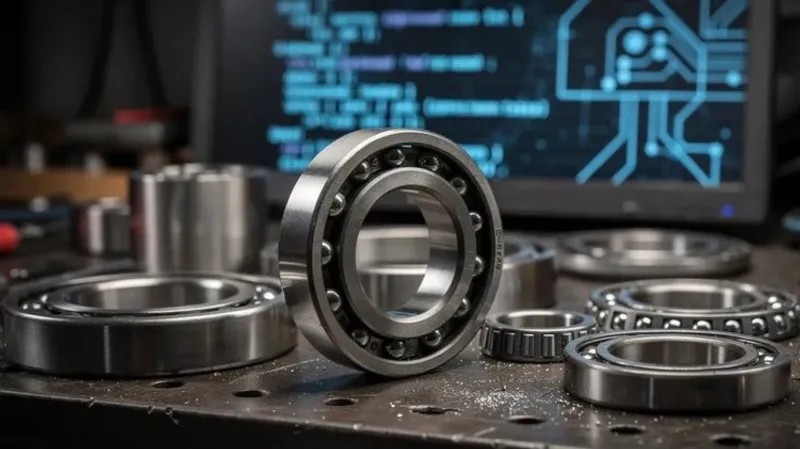
TLDR: BEIJING—A study in Acta Armamentarii describes an AI powered bearing design agent that autonomously designs rolling bearings, pointing to faster industrial parts development for advanced military systems. That matters because quicker, automated precision design can shorten timelines for weapon platforms that rely on high reliability bearings.
Key Takeaways:
- Background: Much military AI focus lands on autonomous weapons and chatty models, but Acta Armamentarii highlights AI in manufacturing design workflows.
- Main fact: Researchers built an AI bearing design agent for autonomously designing rolling bearings for advanced machinery, published in the Chinese defense engineering journal Acta Armamentarii.
- Meaning: Faster design iterations for critical components like rolling bearings can compress upgrade and production cycles for systems that depend on precision reliability.
- Examples: The work targets design of rolling bearings used in advanced machinery, the kind of precision hardware that can sit inside weapons platforms and testing setups.

The quiet shift here is not smarter battle bots but faster blueprints for metal parts. If bearing design accelerates, the schedule bottleneck moves from design to fabrication and validation.
The quiet shift here is not smarter battle bots but faster blueprints for metal parts. If bearing design accelerates, the schedule bottleneck moves from design to fabrication and validation.
Q&A
What makes rolling bearing design a strategic choke point for military platforms?
Rolling bearings carry loads through motion and vibration, so small design changes can affect lifetime, efficiency, and stability. If bearings fail, the whole system’s reliability story unravels.
Why embed AI in industrial design instead of only using AI for battlefield decisions?
Design time and iteration speed shape what gets built at all. Industrial AI can reduce how long engineers spend exploring parameter spaces before prototypes ever exist.
If an AI design agent runs autonomously, what still has to be human verified?
Humans still need to validate safety margins, manufacturability, and real world performance through testing. Autonomy can propose designs faster, but validation remains the guardrail.
How could this approach change the timeline for upgrades to existing systems?
Faster component redesign can enable quicker replacement of worn subsystems, improved tolerances, or better performance under stress without waiting for full platform redesign.
What would be the clearest sign this manufacturing AI is scaling beyond lab demonstrations?
The strongest signal would be repeated, documented use of AI generated bearing designs across production or procurement cycles, plus evidence of shorter qualification timelines in advanced machinery.
Top in AI
Nvidia Rubin CPX stalls as Groq integration tightens supply math

YouTube boosts AI labels as detection automation ramps

ElevenLabs brings Stan Lee voice, likeness back via licensing pact

PostHog trains AI models using customer data

No comments yet. Be the first to share your thoughts!