

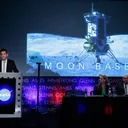
TLDR: WASHINGTON—NASA awarded hundreds of millions for moon base phase one, ordering Blue Origin landers near the south pole. Hardware aims to be ready before 2028 lunar crews arrive.
Key Takeaways:
- NASA sketched phase one less than two months after Artemis II’s lunar flyaround, building toward landings by 2028 and sustained presence in the 2030s.
- Blue Origin will deliver two landers for Astrolab and Lunar Outpost moon buggies near the south pole, while Firefly Aerospace provides the first lunar drones.
- Drones, rovers, and landers become the base’s early logistics system, with MoonFall perimeter marking meant to support a growing lunar economy.

The moon base plan is shifting from postcards to parts lists. Blue Origin is stepping in early, but the real pressure is keeping hardware on pace for crews while the perimeter gets crowdsourced by drones.
The moon base plan is shifting from postcards to parts lists. Blue Origin is stepping in early, but the real pressure is keeping hardware on pace for crews while the perimeter gets crowdsourced by drones.
Q&A
Why does NASA prioritize the south pole landing site for early landers and vehicles?
The south pole offers long lasting sunlight near certain regions, which helps power planning for early operations and later infrastructure as the base expands.
What does Artemis III docking practice signal about the moon base’s next bottleneck?
It shifts the focus from reaching lunar orbit to transferring crews and supplies reliably, which is often the hardest step before any base can support longer stays.
How could MoonFall drone perimeter marking change day to day operations once the base grows?
It could turn navigation and safety into a monitored, automated workflow, reducing uncertainty when new landers and experiments arrive.
What happens if the phase one hardware misses the 2028 crew landing window?
NASA may need to scale down early surface tasks or rely on fewer systems, slowing the transition toward permanent habitats planned for the 2030s.
Why does NASA Administrator Jared Isaacman emphasize reciprocity with other countries’ spacecraft?
Because tracking, proximity, and communications norms will shape international trust, NASA needs clear expectations so drone monitoring does not trigger disputes.



No comments yet. Be the first to share your thoughts!