
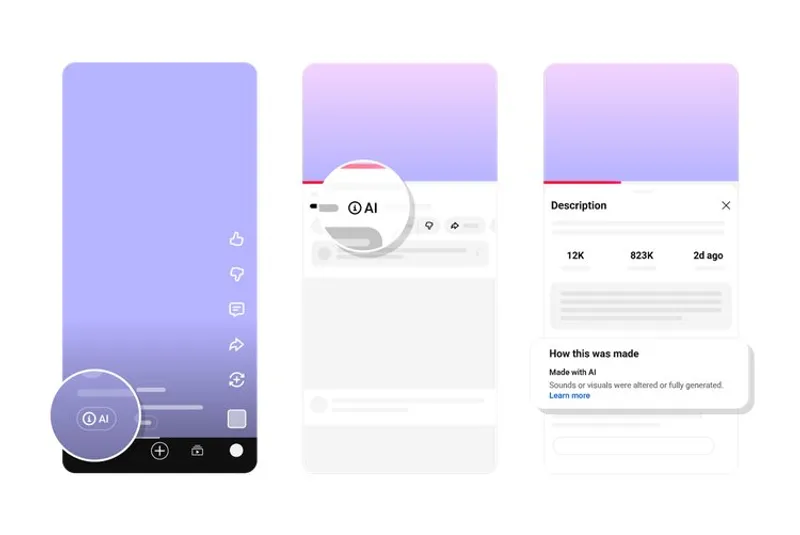
TLDR: YouTube will move photorealistic AI labels below the player for long videos and overlay them on Shorts, and start automatic labeling in May 2026.
Key Takeaways:
- YouTube has required creators since 2024 to disclose realistic AI use, aiming to help viewers spot generative content quickly.
- Starting in May 2026, YouTube will auto apply AI labels when internal signals detect significant photorealistic AI, unless creators already disclosed.
- Labels do not affect recommendations or monetization, but disclosures can become permanent for videos made with Veo or Dream Screen or marked by C2PA metadata.

This is YouTube admitting that manual disclosure alone will always be a game of trust. The new labels push transparency to the moment you press play, while leaving creators just enough room to fix mistakes.
This is YouTube admitting that manual disclosure alone will always be a game of trust. The new labels push transparency to the moment you press play, while leaving creators just enough room to fix mistakes.
Q&A
How will automatic labeling change the incentive for creators who rely on fast turnaround editing?
Creators who do not routinely track AI tool usage may face new labeling friction at upload time, so workflows in YouTube Studio may shift toward proactive disclosure and faster status updates.
Why does YouTube say labels will not change recommendations or eligibility to earn money?
That separation keeps the policy focused on viewer context rather than platform ranking or revenue rules, reducing the chance that labeling becomes a penalty instead of information.
What happens when a creator disagrees with an AI detection result?
They can update the disclosure status in YouTube Studio, but some cases remain permanent, including content created with YouTube AI tools like Veo or Dream Screen or videos carrying C2PA metadata showing fully generative production.
How might label placement affect viewer behavior differently for Shorts versus long videos?
Overlays on Shorts deliver instant context inside the scroll, while the below player placement on long videos makes the disclosure part of the first screen before viewers decide to read the description.
Could automatic labeling raise privacy or accuracy concerns about the signals YouTube uses?
Any detection system can create edge cases, so accuracy disputes and transparency debates are likely to intensify as users test boundary scenarios like stylized animation or slight edits.
Top in AI

YouTube ramps up automatic AI labels for photorealistic videos

Illinois Lawmakers Push Frontier AI Into Third Party Safety Checks
Google’s AI Overviews stumble on spelling inside Search

AI giant surges 1,200% as valuations cool

No comments yet. Be the first to share your thoughts!