
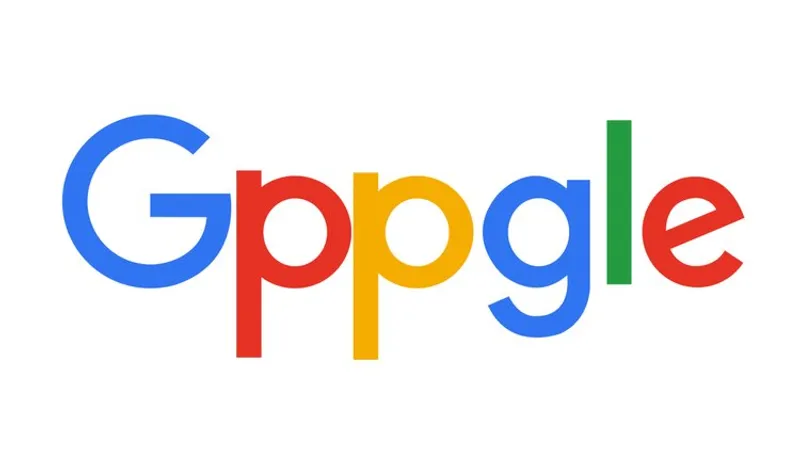
TLDR: Google’s AI Overviews now miscounts letters and misspells words in Search, showing transformer token limits and risking user trust.
Key Takeaways:
- Google is rolling out AI Overviews across its flagship Search, but the feature has already echoed past failures like satire citations.
- In AI Overviews, Google claimed two Ps in Google and misrendered journalism as j o u r n a d i s m, even garbling Trump as t r p u m.
- Counting within words is a known LLM challenge because models tokenize text into encodings, not readable letters, so users must double check results.

It is impressive how quickly Google can generate answers, but it still acts like it learned spelling from a blurry photocopy. The lesson is blunt: if it cannot reliably count letters, you should not let it count on your confidence.
It is impressive how quickly Google can generate answers, but it still acts like it learned spelling from a blurry photocopy. The lesson is blunt: if it cannot reliably count letters, you should not let it count on your confidence.
Q&A
If spelling is a structural weakness, what would “fixing it” actually look like for Google’s Search?
Google would likely need stronger character level representations or hybrid pipelines that verify letter counts, not just better text prediction.
Why do these errors keep slipping through even after Google patches other Search behaviors?
Token based generation can reproduce the same mistaken pattern across prompts, so a localized patch may not change the model’s underlying tokenization behavior.
What could make users trust AI Overviews less, even when answers look confident?
Visible low level mistakes like letter counts create a credibility break, and those breaks can spread through social sharing even if the rest of the answer is correct.
How do transformer tokenizers shape mistakes that look like “reading” problems?
Because tokens may represent chunks rather than letters, the model can treat word level structure as statistical texture, leaving spelling accuracy fundamentally fragile.
What happens next as more companies ship AI features that generate text, not verify it?
Expect a push toward retrieval grounding, answer checking, and tighter UI cues that distinguish generation from verified facts, especially for sensitive queries.
Top in AI

Rivian Assistant turns vehicle control into AI voice demands

Vertus bets on AI reliability against confident hallucinations

YouTube ramps up automatic AI labels for photorealistic videos

Illinois Lawmakers Push Frontier AI Into Third Party Safety Checks

No comments yet. Be the first to share your thoughts!