
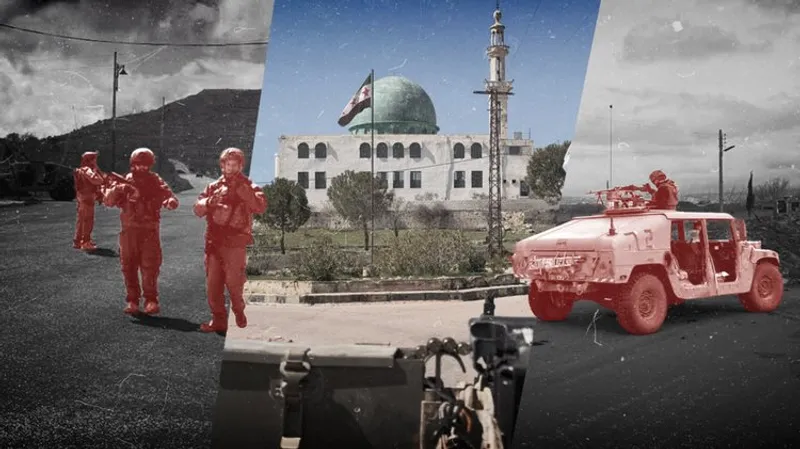
TLDR: QUNEITRA, Syria—Witnesses and a lawyer say Israel has arrested at least 197 men in southern Syria since late 2024, with 43 still held, alleging arbitrary detention. Israel says it targets suspected terrorists and detains people for preventive security under Israeli law.
Key Takeaways:
- After Bashar al Assad’s fall in December 2024, Israel expanded deployments and bases in the Golan buffer zone and on Syrian soil.
- Reports cite raids including arrests in Beit Jinn and Ghadir al Bustan, with detention centers like Sde Teiman, Nafha, and Ofer.
- Families and lawyers accuse mistreatment and arbitrary detention, while Israel cites suspected terrorist links and preventive detention powers.

Israel calls the arrests precision counter terror work. Families describe midnight raids, disappearances, and numbers instead of names, turning a security campaign into a reputational test.
Israel calls the arrests precision counter terror work. Families describe midnight raids, disappearances, and numbers instead of names, turning a security campaign into a reputational test.
Q&A
If UN observers have not directly witnessed the raids, what evidence could break the standoff between detainee claims and Israel’s security rationale?
Independent access to detainee records, consistent court documentation, and verifiable video and medical records would help. UN bodies could press for names, dates, and locations of detention tied to claims.
What happens when preventive detention stays indefinite, especially for people who say they were arrested during routine farm life?
Legal challenges grow harder, trust erodes, and longer detention can harden local resistance or fuel cycles of detention and retaliation. The longer the gap between accusation and disclosure, the more legitimacy collapses.
How does prison location like Sde Teiman affect oversight and accountability compared with detaining people closer to the border?
Distance can limit monitoring by families, aid groups, and investigators. It also reduces the chance of rapid documentation after arrests, making scrutiny depend on permissions and information flow.
Why might minors be seized in the same operational pattern as suspected fighters, and what precedent does that raise for future enforcement?
At the operational level, broad sweeps can capture unrelated household members. That raises the legal and political stakes because it signals uncertainty about targeting criteria and increases pressure to adopt stricter screening.
Could the detainee issue change the ceasefire dynamics between Israel and Syrian authorities or armed actors in the buffer zone?
Yes. Detention narratives can become bargaining chips in negotiations or trigger new retaliatory calculations. Even without formal coordination, perceived collective punishment can reshape incentives for local armed groups.



No comments yet. Be the first to share your thoughts!