
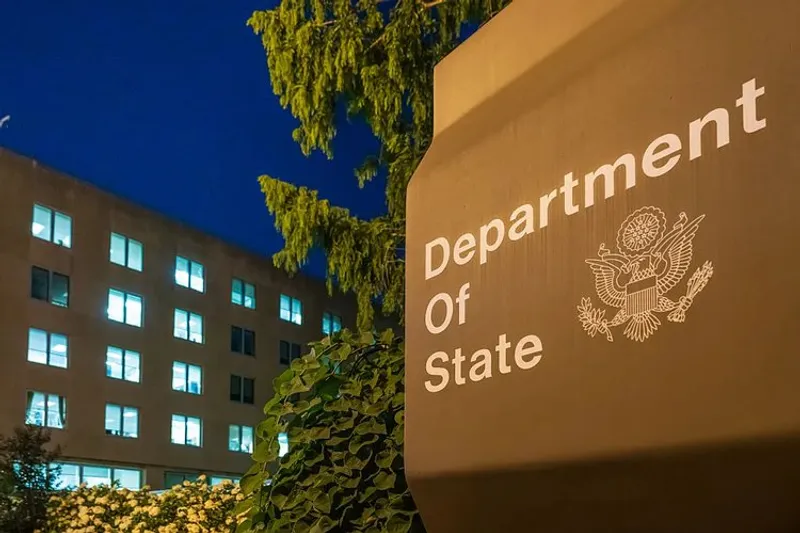
TLDR: WASHINGTON—Wired reports the State Department runs an Office of Remigration that processes payment for third country deportations with little oversight.
Key Takeaways:
- The Office of Remigration sits inside the State Department’s Bureau of Population, Migration, and Refugees, amid Trump expanded third country deportation diplomacy.
- A source says the office processes payments possibly tens of millions of dollars, including lump sums, without monitoring or accountability.
- If costs and recipient details remain opaque, money and deportation deals can outpace scrutiny, fueling human rights and corruption risks for recipient countries.
- Employees tried to change the office name multiple times and were told no, while Trump and Stephen Miller promoted the term on social media.

If an office is doing high stakes money and deportation logistics, hiding it is the point, not the bug. The quiet suggests less governance anxiety and more control over the story.
If an office is doing high stakes money and deportation logistics, hiding it is the point, not the bug. The quiet suggests less governance anxiety and more control over the story.
Q&A
What oversight mechanisms typically apply to international grants, and what changes if payments are routed through a new unit like this?
Federal funding tied to humanitarian or international programs usually comes with audit trails, reporting requirements, and compliance checks; the report describes these guardrails as missing or reduced for remigration related payments.
Why does sending people to countries that are not their own create leverage problems for the United States and riskier outcomes for migrants?
Third country deals can rely on coercive incentives, and migrants may lack legal stability, language access, and local ties, which can amplify harm when enforcement and accountability weaken.
How might naming, staffing, and internal uncertainty inside the State Department affect policy implementation once funds start flowing?
If staff cannot get clear guidance on terminology and mission, execution becomes dependent on informal channels, which can widen discretion and increase the chances of inconsistent or undocumented spending.
What happens politically if Congress keeps blocking attempts to stop third country deportation funding?
With amendments defeated, the executive branch can continue expanding mechanisms while oversight may shift to investigations, court challenges, and later funding fights.
Does the remigration framing help the administration avoid legal and diplomatic friction compared with using older deportation language?
Framing can shift how deals are negotiated and justified, potentially narrowing how critics characterize the policy while still producing the same end result: removals and forced transfers abroad.





No comments yet. Be the first to share your thoughts!