
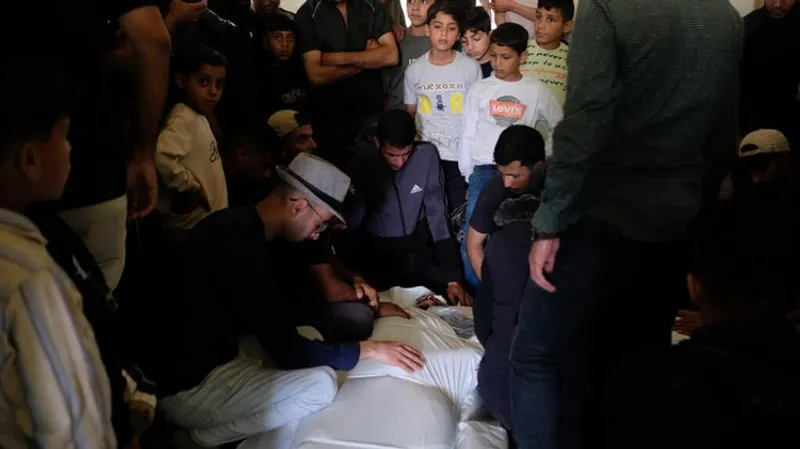
TLDR: GAZA CITY—Israel’s defense ministry says it killed Hamas military leader Mohammed Odeh in Gaza City air strikes Tuesday, less than two weeks after killing his predecessor. Hamas confirmed the death, while casualties and mourners marked Eid al Adha disruptions.
Key Takeaways:
- Israel says Mohammed Odeh became Hamas’s Qassam Brigades leader after the May 16 killing of Izz al Din al Haddad.
- Defense Minister Israel Katz called Odeh an architect of the October 7 attacks, saying Tuesday’s strike killed at least Odeh with five dead and 12 wounded.
- The rapid succession signals Israel’s pressure campaign on Hamas leadership, but Gaza’s displaced residents still face subverted holidays and aid dependence.

This is not just another round of wartime leadership claims. In Gaza, the timing before Eid al Adha turns the message into a grim countdown, with families already living in tents and mourning.
This is not just another round of wartime leadership claims. In Gaza, the timing before Eid al Adha turns the message into a grim countdown, with families already living in tents and mourning.
Q&A
If Israel keeps hitting successive Hamas military heads, what leadership problem does it still not solve?
Hitting individuals can disrupt chains of command, but Gaza conflict dynamics also depend on local networks, logistics, and deterrence signaling that survive leadership turnover.
Why might Hamas confirm Odeh’s death quickly instead of delaying public acknowledgement?
Public confirmation can stabilize internal discipline, protect morale among fighters and supporters, and prevent rumors from reshaping command legitimacy.
What does the strike’s proximity to Eid al Adha change for civilian behavior and security risk?
Holiday movement and gatherings can increase crowding and communication, which can raise the odds of civilian casualties while also complicating how both sides assess battlefield threats.
How does Netanyahu’s election push shape the incentives for escalation or restraint?
Preparing for elections can encourage harder messaging, but Israel also faces tradeoffs if escalation undermines broader political goals or increases international pressure.
If a fragile ceasefire continues, what happens to accountability claims about civilian harm after strikes like this?
Even with ceasefire frameworks, competing narratives over civilian and militant deaths tend to harden positions, making verification and trust harder to rebuild.




No comments yet. Be the first to share your thoughts!