
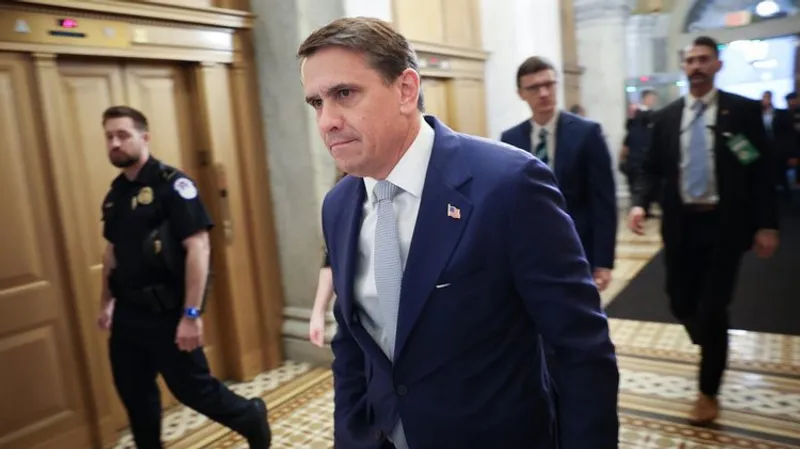
TLDR: WASHINGTON—Rep. Tom Suozzi and Rep. Brian Fitzpatrick urged Republicans to block DOJ’s $1.8 billion anti-weaponization fund, saying it bypasses Congress. The fund could pay settlements to “victims” including people tied to Jan. 6, 2021.
Key Takeaways:
- The House Problem Solvers Caucus co chairs are targeting a Justice Department plan that they say skirts Article I budget control through appropriations.
- Suozzi and Fitzpatrick introduced a bill to stop the fund from disbursing payments, arguing Congress should decide any taxpayer payouts.
- If the fund stays alive, claims could expand to people connected to Jan. 6, fueling GOP rebellion pressure and renewed fights over settlement standards.

Checks and balances are suddenly the headline feature, not a background process. The fight is less about paperwork and more about who gets taxpayer money after violence, and whether Congress will actually pull the lever it controls.
Checks and balances are suddenly the headline feature, not a background process. The fight is less about paperwork and more about who gets taxpayer money after violence, and whether Congress will actually pull the lever it controls.
Q&A
What legal pressure could Congress apply if DOJ keeps disbursing while challengers fight in court?
Congress can try to block funding through legislation and oversight while legal battles proceed, but timing matters because DOJ actions can create facts on the ground.
Why would a Republican co chair take an argument frame about Article I power instead of focusing only on moral objections?
That framing lets the dispute land as an institutional governance issue, not just a partisan one, which can help split ranks in Congress.
How might the prospect of payments reshape claim strategies for people connected to Jan. 6 cases?
Even without guaranteed awards, the possibility of applications can increase incentives to file claims and escalate administrative and litigation workloads.
What could the tense meeting described with Acting Attorney General Todd Blanche signal about internal White House and DOJ alignment?
It suggests the administration may be struggling to contain backlash while keeping the initiative on track, which can widen cracks with allies of President Donald Trump.
How does this episode fit into the broader pattern of executive branch programs colliding with Congress over control of money?
It mirrors recurring fights where agencies use statutory authority to move quickly, while Congress argues only appropriations can legitimize certain expenditures and remedies.
Top in Congress

Booed GOP Rep Flood faces Epstein and Iran backlash
Trump’s White House security bill collides with GOP politics
DOJ vindictive prosecution ruling fuels Smartmatic and SPLC challenges

Trump slush fund pressures Republicans to cut ties
No comments yet. Be the first to share your thoughts!