
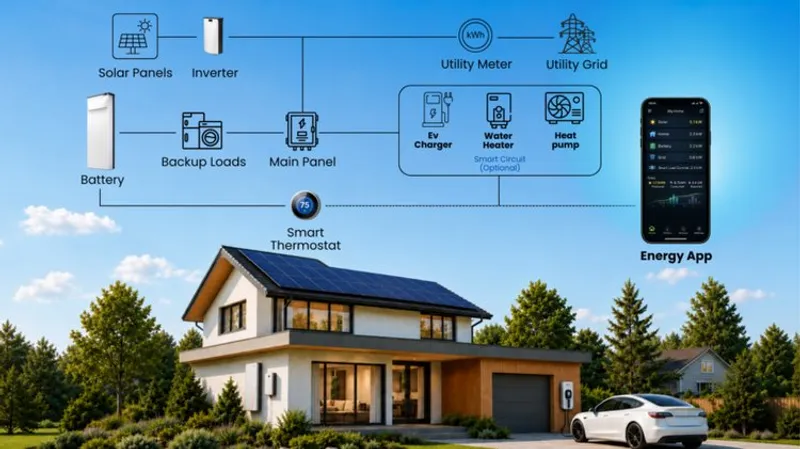
TLDR: Homes are shifting from upgrades to one coordinated energy system. Solar, batteries, and software prioritize loads for bills and outages, including EV charging.
Key Takeaways:
- Decade of electrification: EVs, heat pumps, induction cooking, and connected appliances raise home electricity use.
- Integrated design links solar generation, battery storage, and smart load controls, with software coordinating charging and backup priorities.
- Software optionality lets homes adapt to time of use rates and outages, and it sets up future tools like virtual power plants.

The pitch is simple but powerful: stop buying gadgets one by one and start treating your house like a power plant with manners. The real win is fewer hard choices for the homeowner, because the software decides what matters when prices or outages bite.
The pitch is simple but powerful: stop buying gadgets one by one and start treating your house like a power plant with manners. The real win is fewer hard choices for the homeowner, because the software decides what matters when prices or outages bite.
Q&A
What breaks first when homeowners connect solar, batteries, EV charging, and backup systems without a coordinated plan?
Load priorities and communication. If controls cannot share state and reserve energy correctly, high demand events can overwhelm circuits homeowners expected to be protected.
Why do EV charging and dryers often lose during outages, even when owners expect them to keep going?
Because many households did not design backup around those specific loads. Backup strategies usually protect safety and essential comfort first, then ration large draws.
How does time of use pricing change the design of battery reserve levels?
Designers must decide when to discharge, when to hold energy for backup, and how much flexibility to keep. More dynamic pricing pushes toward smarter reservation and scheduling.
What is the practical difference between a basic smart thermostat and an ecosystem level software layer?
A thermostat optimizes heating and cooling. Ecosystem software coordinates multiple power paths, including battery charge and discharge, EV load throttling, and circuit level protection.
Which homes benefit first from virtual power plant style programs: the ones with the most equipment or the ones with best control design?
Control design. The article frames readiness as already having solar, storage, load control, and connected software working together so participation can happen without rebuilding the system.
Top in Energy

China bets on hydrogen, but costs and demand still bite
MG 4X forces semi solid state EV prices lower
AI sparks grid upgrades as electricity demand surges

MeanderX eases community solar bottlenecks inside Ameren queues
No comments yet. Be the first to share your thoughts!