
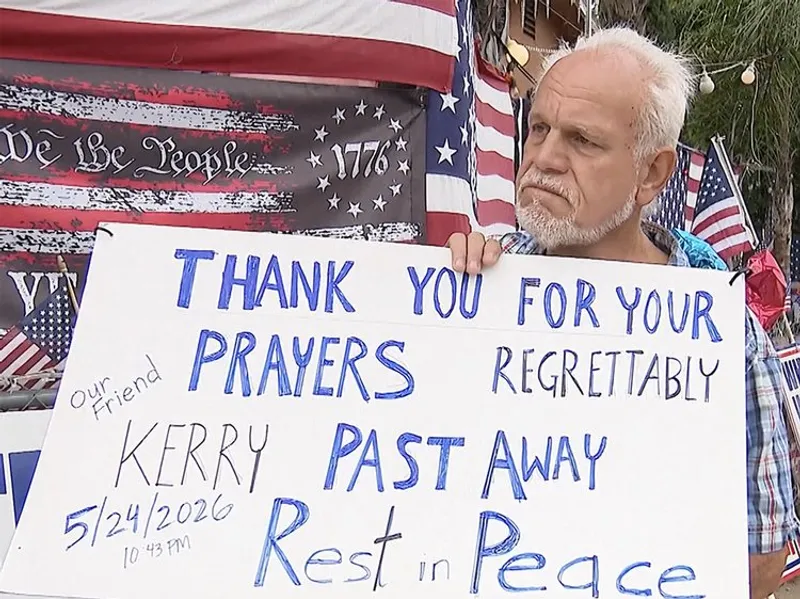
TLDR: ESCONDIDO—Kerry Sheron, 69, died after a Wednesday assault outside his Escondido home with pro Trump decorations. Thomas Caleb Butler, 32, faces attempted murder and elder abuse charges and is held without bail.
Key Takeaways:
- Escondido police say Kerry Sheron was widely known for patriotic and pro Trump displays outside his home in North County San Diego.
- Authorities arrested Thomas Caleb Butler, who prosecutors say struck Sheron in the jaw and then hit his head area; a bystander who intervened was also injured.
- The death escalates a previously reported pattern of harassment into possible criminal charges and leaves motive unresolved as Butler returns to court June 3.

When someone turns their doorway into a public billboard, the neighborhood starts policing feelings in real time. Now prosecutors will have to separate politics from the violence fast.
When someone turns their doorway into a public billboard, the neighborhood starts policing feelings in real time. Now prosecutors will have to separate politics from the violence fast.
Q&A
If authorities cannot yet name a motive, what kinds of evidence usually get pushed hardest next in cases like this?
Investigators typically lean on witness timelines, video or phone footage, any communications before the assault, prior threats reports, and injury patterns that match prosecutor accounts of the force used.
What does prosecutors framing the assault as unprovoked suggest about how they plan to argue intent at trial?
It points toward intent being proved through the defendant’s actions and escalation after the first strike, plus any threats or prior behavior, rather than a fight that began as self defense.
Why does holding Thomas Caleb Butler without bail matter beyond keeping him in custody?
It signals the DA’s view that flight risk or danger to the community is high, which can also shape how quickly evidence can be gathered and whether witnesses feel pressured.
How could the presence of dozens of supporters at Sheron’s home affect the investigation and any later jury perceptions?
It increases the odds of recorded activity and eyewitness accounts, but it also raises the risk of politicized narratives that defense and prosecution will have to counter with verified facts.
What precedent does this recall, and why do similar cases tend to shift public attention toward threat reporting and community safety?
It echoes a pattern where ideological public displays attract both supporters and adversaries, prompting renewed focus on whether threats were documented, acted on, and addressed before physical harm.
Top in Opinion
Commentator draws fire over conditional Democrats, post Trump fatigue
Trump backs prediction markets, betting on CFTC control
Jimmy Kimmel roasts Trump over Don Jr wedding
Trump backs CFTC authority over prediction markets
No comments yet. Be the first to share your thoughts!