
 NVIDIA
 AI
AI LG
LG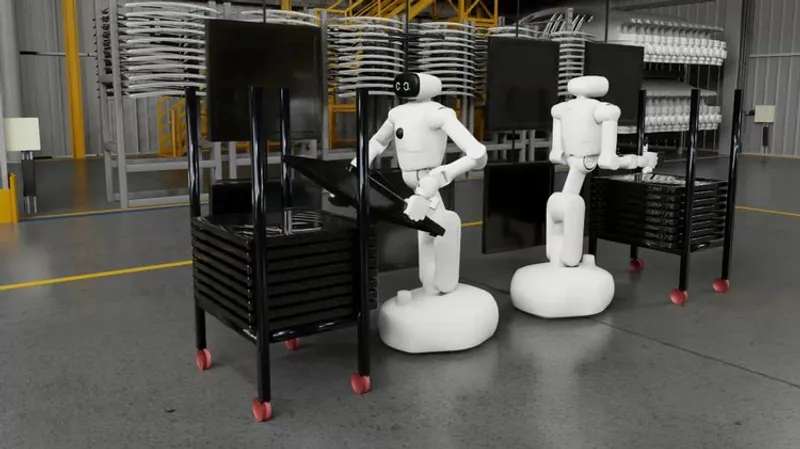
TLDR: SEOUL—Nvidia and LG Group are building an AI factory in South Korea to accelerate LG humanoid and home robot development using Isaac simulation, training, and deployment. The setup links digital twins, synthetic data, and DSX infrastructure, aiming to speed physical AI across robotics, mobility, and enterprise AI.
Key Takeaways:
- LG and Nvidia plan a Korea focused AI factory connecting training, simulation, validation, and deployment across robotics and mobility.
- LG will integrate Nvidia Isaac Sim and Isaac Lab for virtual robot training, explore Isaac GR00T, and jointly build reference robots.
- By pairing synthetic data from Nvidia Cosmos with DSX liquid cooled, modular supercomputing infrastructure, LG targets faster physical AI scaling.

This partnership treats robot intelligence like manufacturing: simulate, validate, then ship. If LG nails the data pipeline and DSX scale, humanoid progress could stop being a science experiment and start looking like a production line.
This partnership treats robot intelligence like manufacturing: simulate, validate, then ship. If LG nails the data pipeline and DSX scale, humanoid progress could stop being a science experiment and start looking like a production line.
Q&A
What could slow LG from turning humanoid concepts into repeatable indoor and industrial skills?
The bottleneck is often physical world variability, not model size. Even with Isaac based simulation and synthetic data, LG will still need robust real world data collection loops to cover edge cases.
Why does linking simulation with physical AI data generation matter more than running larger training jobs?
Robotics performance depends on task specific coverage. Building a workflow that generates, labels, and augments training scenarios can improve learning efficiency faster than simply increasing compute.
How might Nvidia DSX design choices affect where LG can deploy robots at scale?
DSX aligned cooling and modular prefabrication can reduce time to stand up liquid cooled AI infrastructure, making new sites feasible for training, inference, and factory digital twins.
What does EXAONE and ChatEXAONE signal about LG robot and factory strategies?
It suggests LG wants agentic systems that can connect enterprise knowledge with physical workflows, so robots and factories can tap sovereign models for planning, support, and operations.
Could LG end up standardizing on Nvidia workflows more broadly than robots alone?
The reference robot plan, Isaac GR00T ecosystem positioning, and DSX infrastructure alignment point to a broader platform strategy that could carry into logistics, data centers, and mobility software.




No comments yet. Be the first to share your thoughts!