
 AI
AI China
China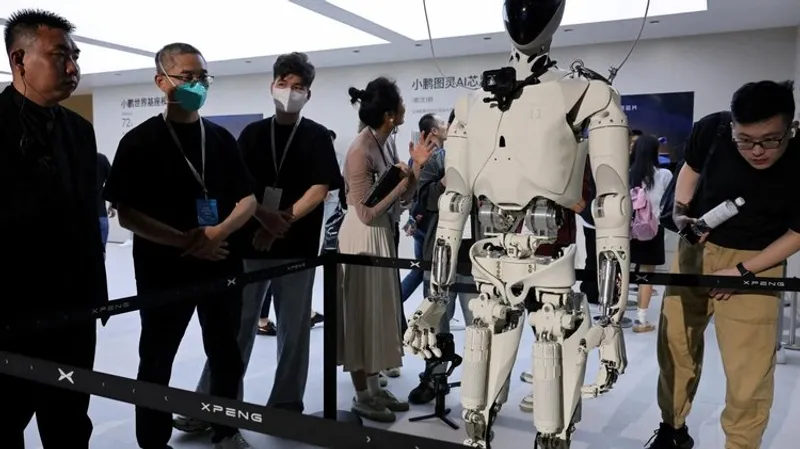
TLDR: BEIJING—China’s Ministry of Industry and Information Technology and SASAC launched a nationwide programme to deploy humanoid robots and embodied AI by end of 2026, with local governments and SOEs proving viability within six months.
Key Takeaways:
- Beijing is shifting humanoid robotics from showroom demos to real-world work, using a nationwide push that covers manufacturing, healthcare, and disaster relief.
- Implementation plans must be submitted by end of June, with progress reports due by end of November, targeting application verification and regular deployment by end of 2026.
- The state sets aggressive scale goals: more than 100 high value applications and 10,000 units by year end, forcing faster system integration and validation.

Six months is a sprint for robot engineering, and bureaucratic deadlines are now part of the hardware roadmap. If the robots do not survive warehouses and hospitals, the hype will get quieter fast.
Six months is a sprint for robot engineering, and bureaucratic deadlines are now part of the hardware roadmap. If the robots do not survive warehouses and hospitals, the hype will get quieter fast.
Q&A
What happens if humanoid robots fail verification in warehouses or hospitals during the six month window?
Local governments and SOEs likely face stalled deployments and budget reprioritization, pushing teams to narrow to repeatable tasks with safer reliability benchmarks.
Why does China pair humanoid robots with embodied AI instead of treating them as separate product tracks?
Embodied AI links perception to physical decision making, and the policy language suggests the government wants integrated systems that can handle messy environments, not just scripted motions.
How could the programme change competition between robotics startups and large state owned manufacturers?
Deadline driven testing favors partners who can scale hardware integration quickly, which may push startups to specialize while SOEs provide deployment channels and compliance.
What operational skills will matter most when robots move from performances to factories?
On site calibration, safety handling, maintenance routines, and task specific workflow integration will likely outweigh flashy gait demonstrations.
Could the policy’s focus on disaster relief accelerate broader adoption in everyday logistics?
If robots gain credibility through high stakes deployment scenarios, operators may justify wider trials in routine settings like inspection and handling, turning emergency tooling into standard automation.





No comments yet. Be the first to share your thoughts!