
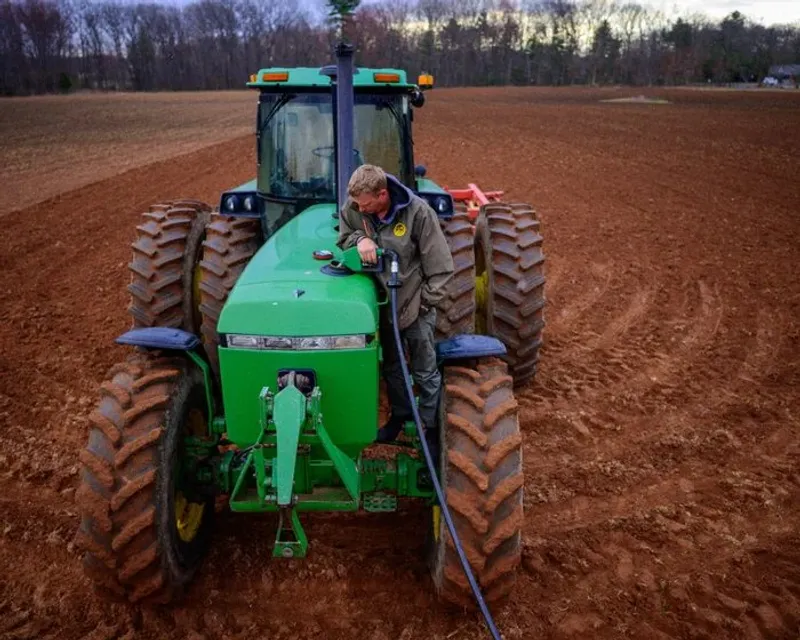
TLDR: WASHINGTON—Diesel fuel has hit record prices during US spring planting, squeezing farmers who say costs are landing at the worst possible time as drought and tariff fallout persist. Agriculture depends on diesel, and the Iran war has pushed fuel higher while reducing fertilizer supplies, leaving farms with less cash and fewer options.
Key Takeaways:
- Farmers are already reeling from tariff losses, including an estimated 34.6 billion hit after trade partners stopped buying last year.
- The Iran war is pushing diesel to record highs and the drought plus disrupted supplies are tightening fertilizer access during spring planting.
- Higher fuel and fertilizer costs can shrink planting acreage or reduce yields, raising food price pressure and farm bankruptcy risk.

When fuel spikes land exactly during planting, the math stops being about efficiency and starts being about survival. Farmers are basically forced to choose between planting like normal and staying solvent.
When fuel spikes land exactly during planting, the math stops being about efficiency and starts being about survival. Farmers are basically forced to choose between planting like normal and staying solvent.
Q&A
If diesel stays at record highs through planting and harvest, how might farm decisions shift first?
Farmers typically trim variable costs first, which can mean smaller planted acreage, slower fieldwork schedules, or cutting back on fertilizer and other inputs, all of which can later show up as lower yields.
Why does agriculture feel diesel price changes so sharply compared with some other sectors?
Farm operations run on diesel powered tractors, harvesters, irrigation pumps, and logistics tied to heavier equipment. Diesel also covers both field work and transport, so price swings hit multiple parts of the same budget.
How do tariffs from the past year still matter even if the immediate trigger is diesel and war related fuel costs?
The tariff shock can drain cash reserves and increase borrowing costs. When new shocks arrive, farms have less buffer to absorb expensive weeks of fuel and supplies.
What policy lever tends to help farmers most during fuel spikes, and why is it politically hard?
Targeted fuel tax relief, emergency loan programs, or price stabilizing measures can help, but they often compete with broader inflation and budget constraints, making quick action difficult.
If drought reduces fertilizer availability, why can that amplify the impact of diesel prices rather than acting as a separate problem?
Fertilizer limits reduce how much farmers can profit from every liter of diesel they spend on field preparation and application. Less yield potential means each cost increase hurts more, tightening margins even further.
Top in Economy

LAUSD rewrites classroom device rules amid mounting screen backlash

Entrepreneurs chase AI wins, while competitors build advantages

Indiantown braces as FPL eyes hyperscale data centers

Watches and burrito taxis show Americans buying small comfort

No comments yet. Be the first to share your thoughts!