
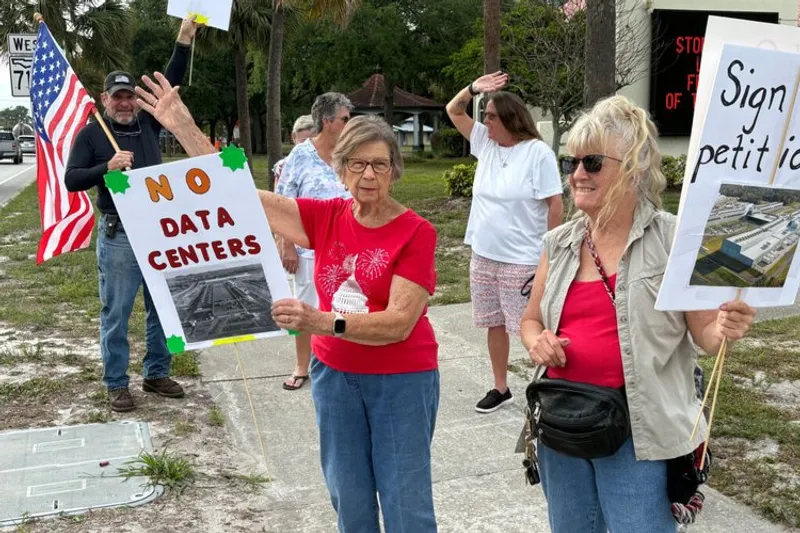
TLDR: INDIANTOWN, Fla.—Florida Power and Light seeks Tesoro Groves hyperscale data centers on 5,700 acres, near Indiantown homes and threatened wildlife. Residents worry about power bills, water impacts, heat, and transparency.
Key Takeaways:
- Indiantown, between Lake Okeechobee and Palm Beach, depends on farmland and is home to about 6,800 residents.
- FPL plans Tesoro Groves on roughly 5,700 acres, replacing sugarcane and wetlands; a 2.2 million square foot rival project Silver Fox was dropped.
- Debate centers on costs and displacement risks: one data center can use power like 500,000 homes and up to 5 million gallons of water daily.

A single server farm could decide whether Indiantown becomes a paycheck story or an exit story. The fight now is less about the future tech and more about who pays for the cooling, the power, and the loss.
A single server farm could decide whether Indiantown becomes a paycheck story or an exit story. The fight now is less about the future tech and more about who pays for the cooling, the power, and the loss.
Q&A
If lawmakers say data centers must cover their own electric costs, why do residents still expect higher bills?
Large load projects can shift how fixed grid costs get spread and can still pressure utility infrastructure planning. Even with load based rates, residents worry about indirect impacts and follow on projects.
What could “promised jobs” look like if most work arrives during construction?
Construction can bring short term hiring while long term staffing stays limited. Residents are likely to push for local hiring commitments, training pathways, and clear timelines before betting on permanent benefits.
How might the state’s new hyperscale rules change what FPL is actually required to prove next?
The rules taking effect July 1 aim to force data centers to bear their power and water burdens and restrict harmful water permitting. That could tighten approvals and increase monitoring demands.
Why does water cooling create a conflict that is harder to “solve” than noise or traffic?
Heat and water needs tie directly to local aquifers and microclimates, not just day to day inconvenience. Once water use affects wells or temperature, the impacts can be hard to reverse quickly.
Could clusters of data centers turn Indiantown’s infrastructure advantage into a long term leverage problem?
If utilities offer sweetheart terms for sites near existing lines, more proposals may follow. That can concentrate impacts in the same communities even as benefits remain uneven.
Top in Economy

Entrepreneurs chase AI wins, while competitors build advantages

Watches and burrito taxis show Americans buying small comfort

China’s luxury buyers turn domestic, pressuring European brands

Hassett downplays storm clouds as sentiment turns political

No comments yet. Be the first to share your thoughts!