
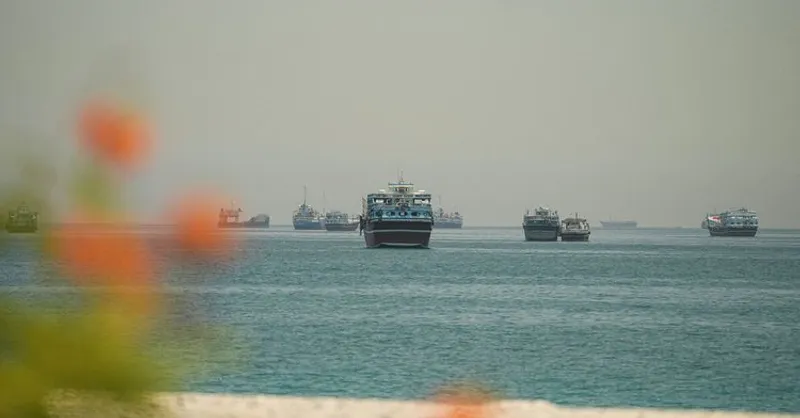
TLDR: DUBAI—Iran says it received a draft U.S. framework that would restore Strait of Hormuz commercial shipping to pre war levels within a month and end a naval blockade by withdrawing U.S. forces from Iran’s vicinity. The claim matters for global energy flows and regional security.
Key Takeaways:
- Iran and the United States are again trading signals over maritime pressure in the Strait of Hormuz, a chokepoint tied to global oil shipments.
- Iran’s state TV says a draft initial framework would reopen Hormuz shipping to pre war levels within a month, while the U.S. would lift a naval blockade and withdraw forces from Iran’s vicinity.
- If negotiations move from draft to signed terms, the biggest swing factor is whether U.S. blockade lifting aligns with measurable shipping normalization inside 30 days.
- Key timeline and commitments include Hormuz shipping to pre war levels within one month and U.S. withdrawal and blockade removal tied to the same framework.

Negotiations that start with unofficial frameworks often end with hard checks on paperwork and behavior. If Hormuz traffic really resumes fast, it will not just be diplomacy, it will be proof under pressure.
Negotiations that start with unofficial frameworks often end with hard checks on paperwork and behavior. If Hormuz traffic really resumes fast, it will not just be diplomacy, it will be proof under pressure.
Q&A
What would have to happen for traders to believe “pre war levels” in a month?
They would look for consistent convoy activity, stable insurance pricing, and fewer reported interdictions or escorts on Hormuz routes that affect scheduling and cargo costs.
Why does a “naval blockade” matter even if it is not formally named the same way by both sides?
What matters for shipping is operational reality: patrol patterns, port access, inspection practices, and turnaround times that can function like a blockade even under different labels.
If the U.S. withdraws forces first, what incentives might Iran have to avoid backsliding?
Iran would likely prioritize verification and reciprocal steps tied to commerce returning, because without enforceable checkpoints, easing pressure could unlock new leverage for the U.S.
How could regional players outside the deal influence whether ships actually use Hormuz safely?
Ports, insurers, and naval posture from nearby states can either reinforce safe passage or keep risk premiums high, regardless of what a framework promises.
What precedent does this resemble in past U.S. Iran maritime flare ups and turnarounds?
It echoes past cycles where tension eased only after visible, measurable changes in maritime enforcement, not just diplomatic statements, forcing both sides to translate rhetoric into shipping conditions.

No comments yet. Be the first to share your thoughts!