
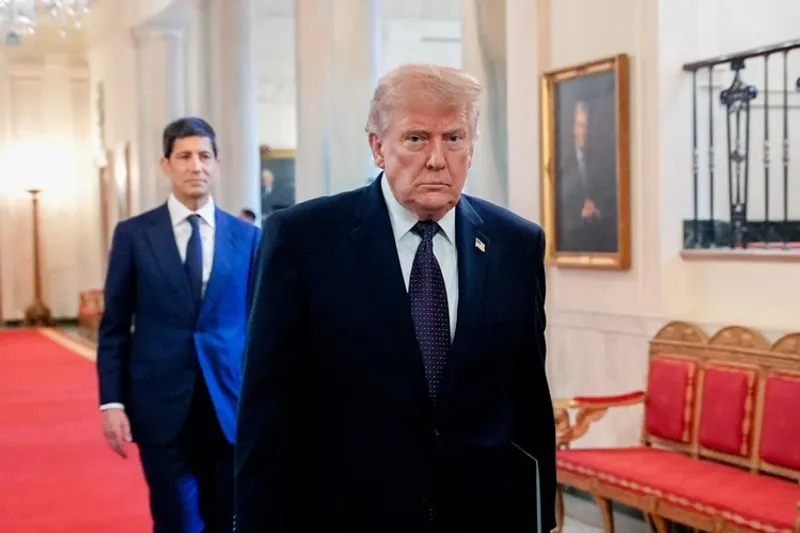
TLDR: GREENLAND—Greenland officials worry Trump could push harder on expanding US involvement near his June 14 birthday. Analysts say his pattern could mean humiliation in Iran or further confrontation, affecting Greenland, Cuba, and US risk.
Key Takeaways:
- Context: Greenland officials are watching a looming US decision window tied to Trump’s June 14 birthday.
- Fact: Analyst Elizabeth Saunders says Trump’s foreign policy discussions lack logic, citing Iran, Greenland, and Cuba approaches.
- Meaning: Saunders frames Iran outcomes as either humiliation via limited nuclear deal or confrontation through escalation and higher casualties.

The scariest part is not a single action, it is the calendar theatrics. If Trump treats diplomacy like a switch, Greenland and the wider region will pay for the trial runs.
The scariest part is not a single action, it is the calendar theatrics. If Trump treats diplomacy like a switch, Greenland and the wider region will pay for the trial runs.
Q&A
If US planners avoid telegraphing military action, why does June 14 still matter?
A key risk is not official signaling but timing. Decision makers can still align actions with personal political calendars even if they do not advertise it.
What would make Greenland’s concern more credible than routine political noise?
Specific indicators like new deployment plans, revised basing timelines, or quiet diplomatic demands directed at Greenland and Denmark.
Why does the Iran framework of humiliation versus confrontation raise the stakes for everything else?
Escalation trains opponents and allies to expect worse outcomes, which hardens bargaining positions across unrelated theaters.
If some military action in Cuba seems inevitable, what limits could still slow it down?
Operational constraints, intelligence gaps, and international pushback can delay or reshape plans even when leadership signals aggression.
How does the Venezuela comparison change what analysts expect from Trump’s decision style?
It suggests a belief that regime change or coercion can be fast and unilateral, which historically underestimates friction, legitimacy costs, and escalation control.

No comments yet. Be the first to share your thoughts!