
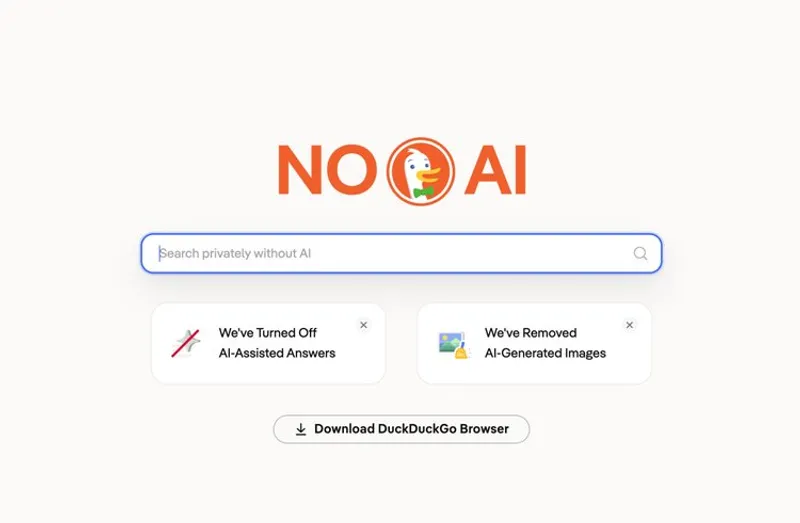
TLDR: ATHENS, Greece—DuckDuckGo said US installs rose up to 30.5% peak after backlash to Google’s AI Search changes, with noai.duckduckgo.com visits up 27.7%.
Key Takeaways:
- Google replaced blue links with AI agents that answer, execute tasks, and run background monitoring, sparking open web fears and accuracy worries.
- DuckDuckGo reported US app installs up 18.1% week over week and iOS up 33% average, while noai.duckduckgo.com visits rose 22.7% WoW.
- The numbers suggest users want control and privacy, even if DuckDuckGo still offers choice among its own AI products.

Google bet on AI convenience and got a user revolt instead. DuckDuckGo is cashing in on the simple promise of turning it off, which is a rare win in the attention economy.
Google bet on AI convenience and got a user revolt instead. DuckDuckGo is cashing in on the simple promise of turning it off, which is a rare win in the attention economy.
Q&A
If Google adds more controls later, does DuckDuckGo keep the momentum or does the backlash fade?
Momentum likely depends on whether users feel true opt out is meaningful. If Google limits AI or offers credible per query toggles, some churn may slow.
Why do privacy features like IP stripping matter to a search product even when people mainly complain about AI answers?
Users often group trust concerns together. If AI search feels opaque, privacy guarantees become the emotional proof that they are still in charge.
What happens to the open web when AI agents do tasks and monitoring instead of routing users through links?
Less link traffic can reduce referral income and visibility for publishers. Over time that can weaken the incentives that keep sites producing content.
DuckDuckGo also offers AI tools like Duck.ai, so why does it still win with users rejecting Google AI?
It sells choice and control, not a default takeover. Users who dislike AI can switch it off, while others can opt in without being pushed.
Could antitrust arguments about default distribution shift from browser defaults to AI default experiences inside search itself?
Yes. If users feel they are unable to avoid AI behavior, that can resemble the same leverage problem but inside the product flow rather than just search engine contracts.





No comments yet. Be the first to share your thoughts!