
 Trump
Trump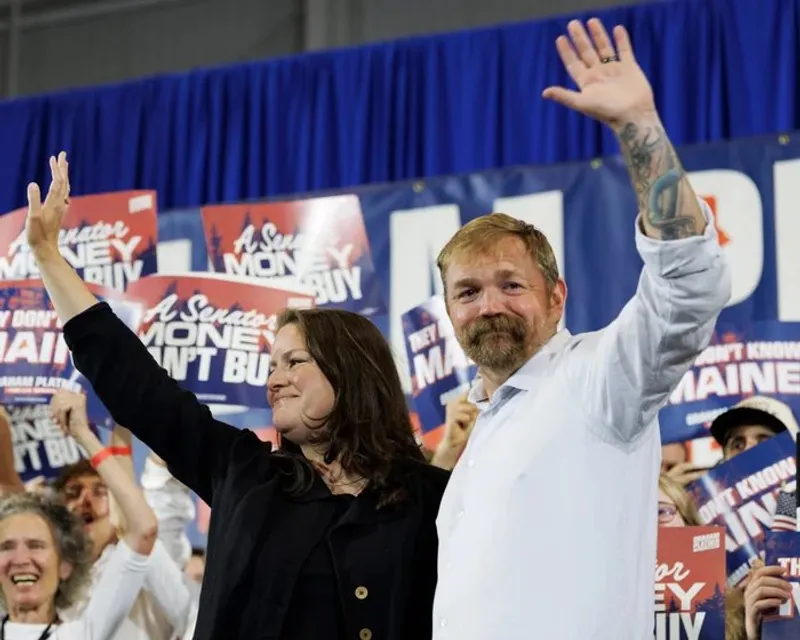
TLDR: MAINE—Maine Democrats rallied behind Graham Platner after his primary win, while Trump reinforced GOP control by defeating a candidate tied to Epstein files release.
Key Takeaways:
- The four state primaries in Maine, Nevada, North Dakota, and South Carolina set the tone for both parties heading into 2026 midterms.
- Graham Platner won in Maine, and Trump used his pull in the GOP fight to stop a politician who sought the release of Jeffrey Epstein files.
- The mixed primary signals suggest Democrats are consolidating around controversy while Republicans remain tightly aligned with Trump ahead of November contests.

Platner’s win shows Maine Democrats can stomach chaos if it looks like momentum. Across the GOP, Trump’s priorities still beat local instincts in high stakes primaries.
Platner’s win shows Maine Democrats can stomach chaos if it looks like momentum. Across the GOP, Trump’s priorities still beat local instincts in high stakes primaries.
Q&A
Why would Democrats rally around a controversial figure right after a primary win?
Primary victories can function as proof of discipline for a party base. If Democrats believe Platner can attract turnout in general elections, they may treat controversy as a fundraising and mobilization tool rather than a liability.
What does Trump beating an Epstein files release advocate signal about GOP coalition management?
It suggests Trump is willing to trade sensational issues for loyalty tests. By prioritizing a candidate’s willingness to align, he keeps the GOP’s internal agenda predictable for national campaigning.
How can mixed results across four states change campaign strategies for November?
Mixed signals push parties to narrow their playbooks by district. Instead of betting everything on a national wave, they will likely target persuasion efforts where the electorate is already leaning, and defend messages where turnout is unstable.
Why do primary elections often look like a preview of midterm messaging rather than just candidate selection?
Primaries reveal which narratives survive intra party pressure. Parties then reuse winning themes in general election ads, debate prep, and donor messaging to match the energy that carried voters through the primary.
If Trump’s grip stays strong in the GOP, what could Democrats do that differs from standard opposition messaging?
Democrats may shift from generic criticism to contrast by targeting specific coalition behaviors, showing how Trump aligned the GOP behind certain agendas and away from others, then tying that contrast directly to local economic and governance stakes.





No comments yet. Be the first to share your thoughts!