
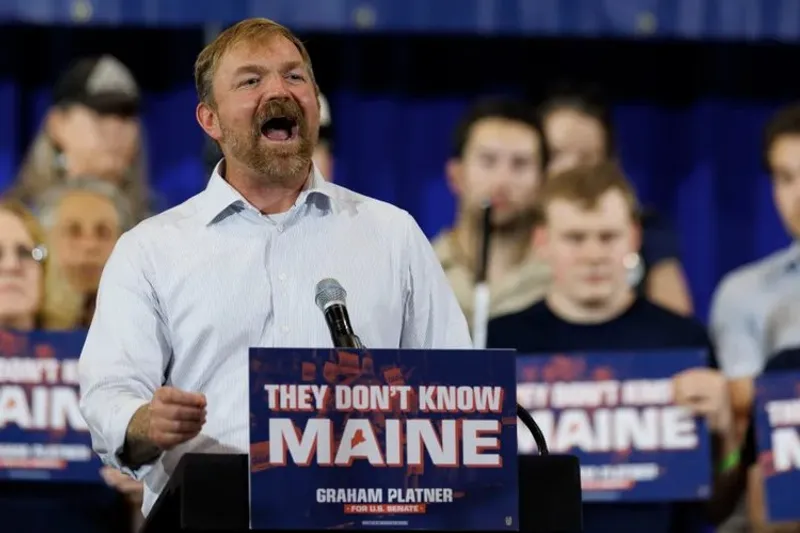
TLDR: BLUE HILL, Maine—With 88% of votes counted in the Maine Democratic U.S. Senate primary, Graham Platner led Janel Gideon 71.9% to 71.5%, easing fears of a collapse after recent scandals. The race is headed to a November face off with incumbent Sen. Susan Collins.
Key Takeaways:
- Maine Democratic voters faced a short, chaotic path after Governor Janel Mills dropped out, leaving Graham Platner to defend himself through scandal allegations.
- Platner held 71.9% with 141,581 votes against Sara Gideon’s 71.5% and 116,264 votes as of Wednesday with about 88% tabulated.
- The Democratic Senatorial Campaign Committee leaned into support, while Platner denied any “concerning pictures” and a Republican memo warned not to underestimate him.

The scary part for Platner was never just losing voters, it was losing momentum. So far, Maine Democrats are choosing the “survivor” over the “sorry,” even as the sexting questions refuse to stay buried.
The scary part for Platner was never just losing voters, it was losing momentum. So far, Maine Democrats are choosing the “survivor” over the “sorry,” even as the sexting questions refuse to stay buried.
Q&A
What could still derail Platner even if his primary lead holds steady?
General election pressure tends to intensify after primaries, especially if opponents tie the sexting controversy to character, judgment, or temperament in contrast to Sen. Susan Collins’s brand of durability.
Why does the close governor primary matter for the Senate race narrative?
It signals Democratic enthusiasm and coalition strength under ranked choice voting. If the Senate race underperforms those statewide dynamics, Platner could face a late swing in turnout.
What does Gideon’s strong showing suggest about Platner’s ceiling inside the party?
It implies a meaningful slice of progressive and party loyalist voters still wants a different lane. Platner can win the nomination but still inherit softer margins in key blocs.
How do ranked choice dynamics in the governor race indirectly influence Senate strategy?
Candidates and outside groups will watch second round transfers. That can shape messaging about pragmatism versus purity, and it can determine which progressive partners Platner must keep satisfied.
Why would Republicans send a memo warning Democrats not to underestimate Platner?
They likely see evidence that scandal fatigue has not neutralized him. That pushes them to compete on mobilization and contrast rather than assuming the primary outcome automatically dooms the nominee.





No comments yet. Be the first to share your thoughts!