
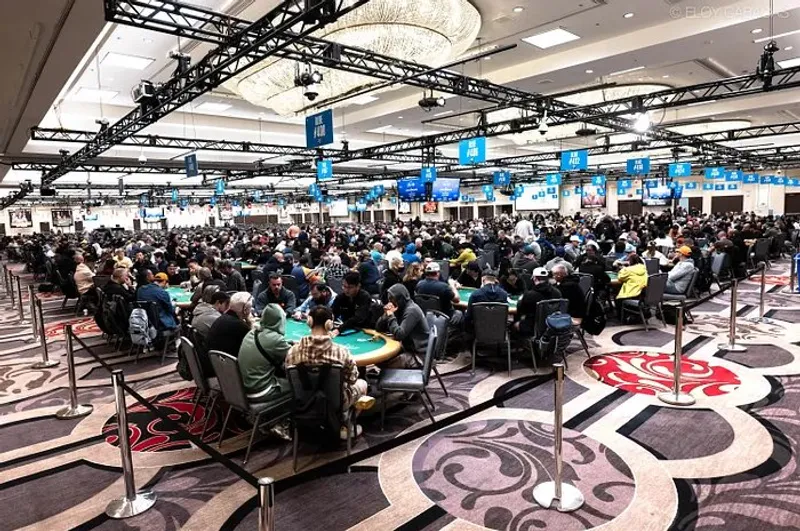
TLDR: LAS VEGAS—WSOP 2026 started at 12:00 p.m. local time with Michael Mizrachi saying Shuffle Up and Deal, launching Day 1a. Jansen Satparam topped Event #1 with 1,800,000 chips and Yuri Dzivielevski led Event #2 with 715,000 as both set up Day 2.
Key Takeaways:
- WSOP 2026 runs 50 days at Las Vegas, with 100 bracelet events and multiple Day 1 routes funneling players into Day 2.
- Satparam turned 25,000 into 1,800,000 to lead Event #1 Day 1a, while Dzivielevski bagged 715,000 in Event #2 Day 1.
- High leader stacks and late registration keep pressure on the field, while Events #3 and #4 add fresh seats and new bracelet chances.

The summer season always feels like a countdown to noise, and WSOP 2026 opened with two names already shouting back. If you are still building your stack on Day 2, you are doing it while bigger stacks are already warming up their bluffs.
The summer season always feels like a countdown to noise, and WSOP 2026 opened with two names already shouting back. If you are still building your stack on Day 2, you are doing it while bigger stacks are already warming up their bluffs.
Q&A
How do chip counts like 1,800,000 at 59 big blinds shape strategy for Day 2?
A big lead lets the chip leader apply pressure in late position, but they also have to avoid get out of line spots where variance can erase the advantage quickly.
Why does Event #1 shrink from 1,635 entrants to 60 advancing, and what does that imply for the grind?
The steep cut rewards consistent survival over highlight swings, meaning players who chased small edges early likely benefit more than those who burned stacks searching for big pots.
What changes when late registration stays open until Level 12 around 3:15 p.m. local time in Event #2?
Late entrants can change table dynamics, so leaders like Dzivielevski must stay flexible and resist treating the first table they dominate as the only one that matters.
Why do lists of recognizable names who cashed but missed Day 2 still matter for how Day 2 plays out?
They signal that the cutoff was tight enough to punish well known talent, which usually raises caution among average stacks and increases the value of position and table image.
With Events #3 and #4 starting at 12:00 p.m. and 2:00 p.m. local time, how might player schedules affect attention and fields across the week?
Players with multiple entry plans can shift focus between tables and workouts, which can subtly skew who plays aggressively and who defaults to survival when Day 2 is already on deck.
Top in Poker

Finley beats Toscano for Oklahoma State Poker title

Murciano crushes Zafra to redeem Barcelona trophy

Paddy Power Poker’s Missions Press Players Toward Weekly €1,000

Track WSOP mixed game stars with PokerNews MyPlayers

No comments yet. Be the first to share your thoughts!