
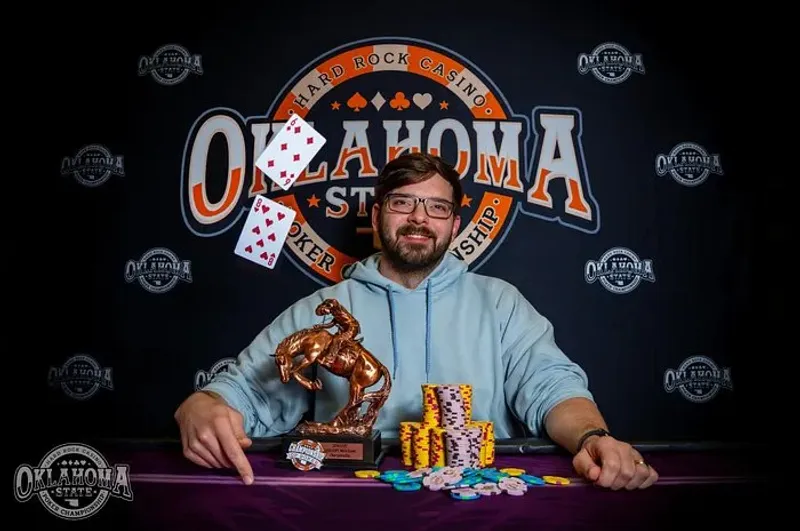
TLDR: DURANT, Okla.—Anthony Finley won the 2026 Oklahoma State Championship of Poker $800 Main Event on the final day, beating Arturo Toscano heads up for $58,803.
Key Takeaways:
- The $800 event drew 417 runners, and only 29 returned for Day 2 before the final-table sprint narrowed to one champion.
- Finley erased a 1.5:1 heads up chip deficit with key pots, including a big hand where he turned a boat to win the final pot.
- Finley’s 2026 title follows a third place finish in 2025, and his shift toward aggression helped him survive big early pressure and later pay jumps.

Poker rewards patience until it suddenly does not. Finley leaned on disciplined folds, then flipped the script at exactly the right moments to cash in for the big redemption arc.
Poker rewards patience until it suddenly does not. Finley leaned on disciplined folds, then flipped the script at exactly the right moments to cash in for the big redemption arc.
Q&A
Why did Finley say he survived early aggression better in 2026 than in 2025?
He described last year as his first real final table, where he struggled to respond to pressure. This year he felt more comfortable applying aggression on purpose, not just reacting.
What happens to tournament dynamics when a five handed table stalls for over two hours?
With pay jumps rising, chip stacks compress and decision quality matters more than speed. When cards finally swing, the next key hand can feel like a delayed avalanche.
How can a long five-handed stretch change a heads up mindset?
After extended consolidation, players often see fewer clean opportunities and become more selective. That can make early heads up pots swing confidence fast, even without showdown.
What makes the final hand sequence with a flopped board runout so decisive in tournaments?
When a flop checks through and the turn improves one side, both ranges can lock in. The resulting raising war forces maximum exposure, leaving only the river to decide.
Why is winning after starting the final table fifth in chips still a realistic path?
A mid stack can survive by taking advantage of timing. In this run, eliminations and later coolers created openings, allowing Finley to rebuild and then attack when stacks tightened.
Top in Poker

Murciano crushes Zafra to redeem Barcelona trophy

Paddy Power Poker’s Missions Press Players Toward Weekly €1,000

Track WSOP mixed game stars with PokerNews MyPlayers
Champions Social Club Opens Dallas Poker Room After Legal Push

No comments yet. Be the first to share your thoughts!