
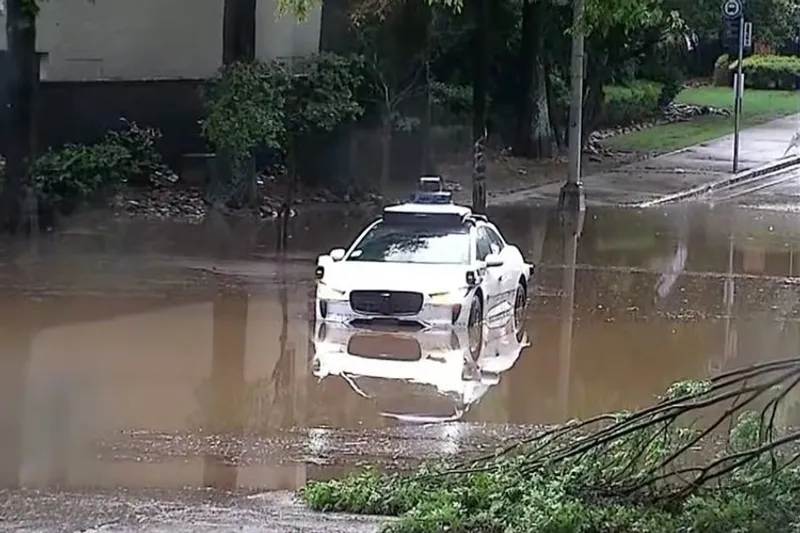
TLDR: ATLANTA—Waymo temporarily halted robotaxi service in Atlanta, Austin, Dallas, and Houston after vehicles drove into floodwaters, including a stuck car in Atlanta. A software update aimed at avoiding flood risk did not prevent the Atlanta incident as flooding surged before alerts.
Key Takeaways:
- Waymo previously paused service in San Antonio after flood related problems, and later issued a recall for thousands of vehicles to apply a flood risk update.
- Waymo says flooding began before emergency alerts reached its cars, so the software fix did not stop vehicles from entering flooded streets in Atlanta.
- Service suspensions spread beyond one city, while federal scrutiny continues over school bus stops and a child struck in California.

The irony is that Waymo is built for data driven safety, but a fast moving flood can outrun alerts and algorithms. Until the software catches up with reality, cities will keep getting rain checks.
The irony is that Waymo is built for data driven safety, but a fast moving flood can outrun alerts and algorithms. Until the software catches up with reality, cities will keep getting rain checks.
Q&A
What happens when flooding starts before the emergency alerts a vehicle is relying on?
The vehicle needs faster internal detection, like onboard sensing and predictive risk models, rather than waiting for external alert triggers.
If Waymo can detect elevated flood risk better, will it fully restore service or keep a more cautious operating approach?
A stronger detection system could reduce pauses, but Waymo may still choose geographic or time based limits during storms to manage edge cases.
How does a multi city suspension change public trust compared with one isolated incident?
Multiple cities suggests a repeatable failure pattern, which makes riders and regulators focus less on bad luck and more on systemic safeguards.
What could regulators look for next given the NHTSA investigation alongside the flood incidents?
They can compare safety behaviors across scenarios, asking whether fixes in one risk area improve reliability in others or simply shift failure modes.
Why might a vehicle still enter water even if it is designed to be safer than humans in normal driving?
Flood conditions can break assumptions about traction, road boundaries, and timing, so even risk based logic may misclassify what is passable in seconds.



No comments yet. Be the first to share your thoughts!