
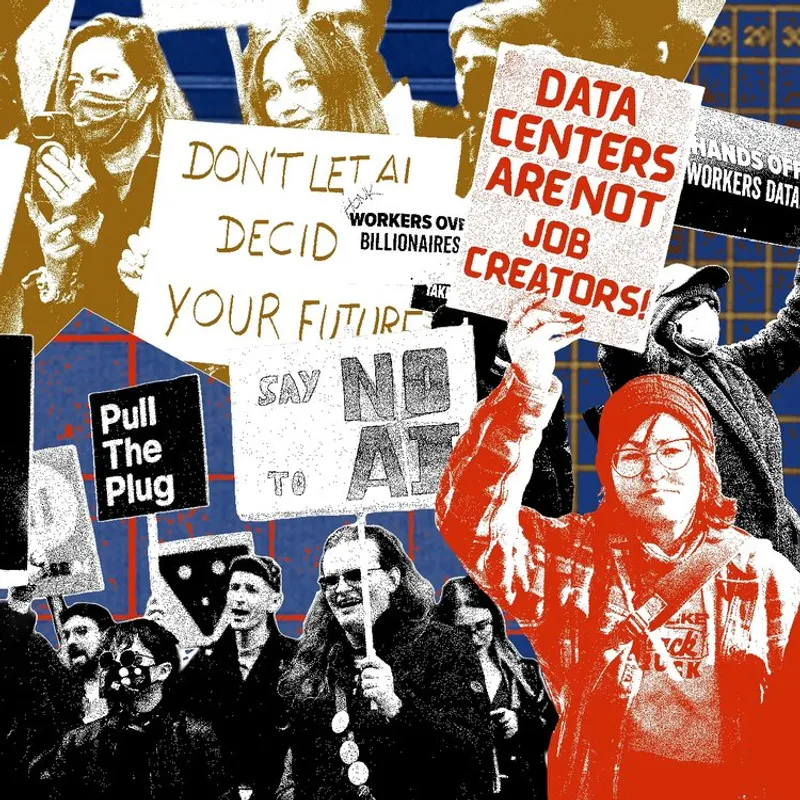
TLDR: WASHINGTON—Federal intelligence and law enforcement agencies are circulating unpublished DHS and FBI reports that introduce the broad label anti tech violent extremism amid AI backlash and data center protests. The new framework can sweep in peaceful organizers and speech, raising bias concerns as fusion centers also flag routine activities like photography, observation, and security testing.
Key Takeaways:
- Fusion centers created after 9 11 connect DHS and FBI reporting with state and local police, and they increasingly track AI related grievance and data center opposition.
- A New York Intelligence and Counterterrorism Bureau report warns AI adoption could fuel large scale protests and anti tech violent extremist activity, using the term anti tech violent extremism.
- Legal experts warn that suspicious activity reporting can treat constitutionally protected protest behaviors as threat signals, risking surveillance and criminalization of nonviolent critics.

AI anxiety is turning into paperwork, and paperwork is turning into surveillance. When threat categories widen, the people most likely to get questioned are the ones holding signs, not the ones holding explosives.
AI anxiety is turning into paperwork, and paperwork is turning into surveillance. When threat categories widen, the people most likely to get questioned are the ones holding signs, not the ones holding explosives.
Q&A
What happens when a new threat label like anti tech violent extremism has no clear public definition?
The label can expand quietly through internal reports and fusion center templates, leaving officers more discretion and making it harder for the public to understand what behavior counts as threatening.
Why do suspicious activity reports often broaden beyond actual intent to harm?
Fusion center reporting typically relies on permissive suspicious activity indicators, so vague behaviors like observation, photography, or pre operational planning can be reinterpreted based on the investigator bias.
How could monitoring of critical infrastructure protests affect local democracy?
If town halls and school board meetings become intelligence sources, residents may self censor, organizers may face extra scrutiny, and community conflict can harden into a security mindset.
What does the AI alignment community learn from a shift from safety debate to extremism framing?
Even nonviolent fear based theories about AI can be treated like a risk factor, which may chill open discussion among engineers, researchers, and companies seeking accountability.
How might OSINT contractors and bulletins change the speed and volume of enforcement attention?
Private monitoring can rapidly translate online sentiment into threat leads, increasing false positives and giving agencies more material to route into investigations before intent is proven.





No comments yet. Be the first to share your thoughts!