
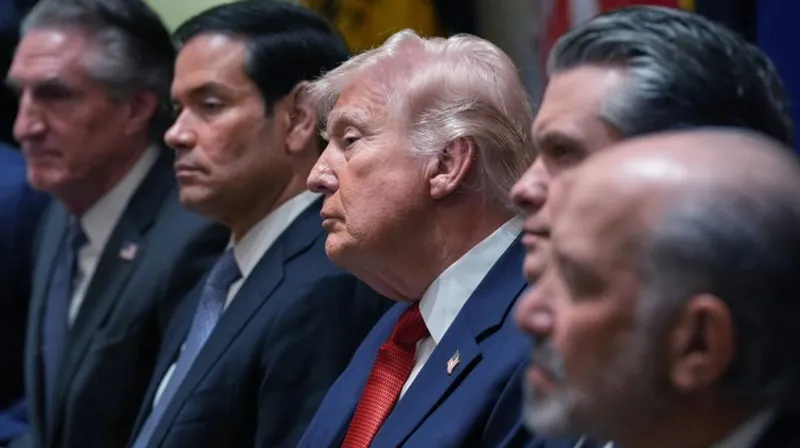
TLDR: TEXAS—President Trump convenes the 12th Cabinet meeting of his second term on Wednesday as Iran war negotiations remain stalled. In Texas, runoff results leave Sen. John Cornyn out of office after Ken Paxton pushes him aside in the GOP primary, reshaping GOP balance.
Key Takeaways:
- Context: Trump’s second term adds its 12th Cabinet meeting during an Iran war ceasefire attempt that still has no deal.
- Main fact: Texas GOP primary fallout turns into an office shakeup as Ken Paxton runs John Cornyn out, with Al Green also in the race mix.
- Meaning: The twin pressure points signal how national security gridlock and state power contests can redefine who holds leverage next.

Cabinet meetings often sell unity, but the Iran talks still look stuck at the part where everyone insists they have leverage. Down in Texas, power politics moves faster than policy language.
Cabinet meetings often sell unity, but the Iran talks still look stuck at the part where everyone insists they have leverage. Down in Texas, power politics moves faster than policy language.
Q&A
If Iran ceasefire talks stay stuck, what leverage can Trump try next without escalating the war further?
Expect pressure through diplomacy that signals consequences, paired with targeted military posture adjustments meant to deter without triggering a larger direct conflict.
What happens inside the Cabinet if the Iran endgame stalls again during this meeting?
Decision makers usually split into workstreams, pushing draft proposals and contingency plans rather than locking one roadmap, with more authority deferred to specialized deputies.
Why does a Texas GOP primary challenge translate into immediate office shakeups, not just campaign headlines?
Primary outcomes can quickly alter candidate pipelines, committee influence, and endorsements, which in turn reshape who can win general elections and control legislative agendas.
How might Al Green’s continued presence in the Texas contest change strategy for both parties after the GOP fallout?
Parties may retool messaging and resource allocation, since a strong opposition candidate can force the GOP to spend on turnout and messaging rather than infrastructure.
Historically, when do Cabinet gridlocks and state party power shifts start reinforcing each other?
When national leaders need political cover, state contests can become proof of strength, while national friction pushes local actors to demand faster results and clearer alignment.



No comments yet. Be the first to share your thoughts!