
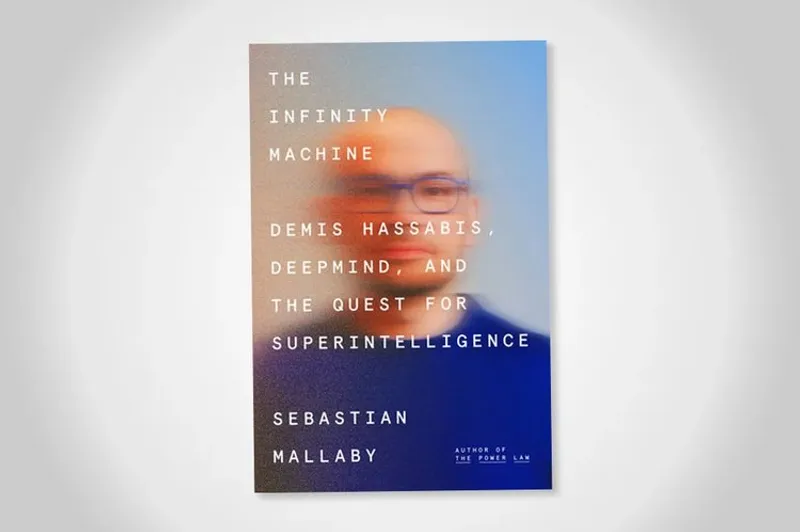
TLDR: Sebastian Mallaby’s The Infinity Machine traces Demis Hassabis and DeepMind’s shift from AlphaGo and AlphaFold science to Google products, reframing campus AI futures. It argues today’s messy generative tools may be temporary while more reliable, judgment capable systems reach universities.
Key Takeaways:
- Background: Inside Higher Ed recommends looking beyond campus AI policies and demos to the real R and D story behind DeepMind and superintelligence.
- Main fact: The book ties DeepMind’s ChatGPT era pivot into Google product releases like Gemini to a long term belief in AGI and superintelligence.
- Meaning: AlphaFold is used as the analogy for how AI progress could rapidly improve university life once systems stop hallucinating and act as trusted collaborators.

Universities keep debating today’s AI glitches, but Mallaby’s DeepMind origin story nudges the conversation toward what comes after the current hype cycle. The scary part is not faster text, it is smarter judgment arriving with less noise.
Universities keep debating today’s AI glitches, but Mallaby’s DeepMind origin story nudges the conversation toward what comes after the current hype cycle. The scary part is not faster text, it is smarter judgment arriving with less noise.
Q&A
If generative AI is only a “brief stop,” what would a campus workflow look like when systems stop hallucinating and start judging?
Expect AI to shift from drafting to verifying, tutoring, and decision support, with stronger provenance checks, citations, and policy aware recommendations built into everyday tools.
Why does AlphaFold matter for predicting universities more than AlphaGo does?
AlphaFold improved a scientific pipeline rather than just a game skill, so its lesson is about enabling trusted problem solving in messy real world domains.
What happens to academic integrity debates if embedded assistants become trusted collaborators instead of shortcut generators?
Policy emphasis would likely move from “Did you write it?” toward “How did you use it?” including documentation, reasoning trails, and supervision standards for AI mediated work.
DeepMind’s internal shift after ChatGPT changed the lab to an engineering machine. How might that affect what students see first?
Students may get reliability and interface upgrades earlier than truly general intelligence, because product teams prioritize deployable capabilities with clear user value.
What is the biggest risk in assuming today’s university AI turbulence will fade quickly?
Even if the technology improves fast, institutions may lag in governance, training, and procurement, leaving students to experience the transition through uneven, inconsistent rules.
Top in Books

Martha Raddatz spotlights military heroism in The Hero Next Door

Grisham fights AI slop audiobooks on YouTube

Barnes and Noble shelves AI books and signals trouble

Commonwealth Prize winner sparks AI “literary slop” credibility crisis

No comments yet. Be the first to share your thoughts!