
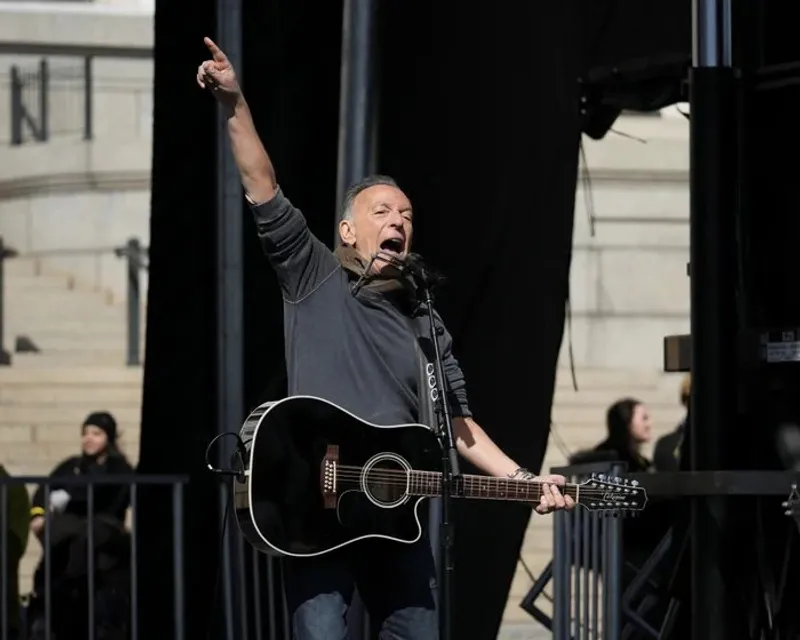
TLDR: BROOKLYN—In Brooklyn, Bruce Springsteen framed a three hour concert as anti Trump resistance. The push matters because fans are urged to fight for democracy.
Key Takeaways:
- Springsteen has long mixed music with politics, and this Brooklyn stop leans into open anti authoritarian messaging.
- He delivered a three hour, thunderous set positioned as an anti Trump resistance, directly challenging fans to step up.
- Celebrity activism can shift cultural attention fast, and this model aims to convert concert energy into real civic pressure.

When the stage becomes a rally, lyrics land like instructions. Springsteen is betting that joy plus pressure can move people from cheering to organizing.
When the stage becomes a rally, lyrics land like instructions. Springsteen is betting that joy plus pressure can move people from cheering to organizing.
Q&A
How does turning a concert into a resistance event change what fans do afterward?
It nudges the emotional high into action, making civic participation feel personal and urgent rather than distant.
Why does Springsteen’s approach land with mainstream audiences more than sharper partisan messaging?
He wraps political demand in familiar working class storytelling, which broadens appeal and lowers the instinct to dismiss.
What risk comes with celebrity calls to oppose authoritarianism?
Fans may treat it as symbolism only, or backlash could shift focus away from democracy to the celebrity himself.
What would success look like beyond social media reaction after a show like this?
Measurable turnout for local advocacy, voter registration drives, and sustained volunteer commitments that outlast the encore.
Could this model shape other artists, or does it depend on Springsteen’s unique credibility?
It likely depends on trust and consistency; the more the message matches an artist’s long public record, the more it carries.
Top in Music

Madonna’s space heater fire fuels Bilt’s Music Building rent
McCartney admits nerves approaching Dylan after Coachella moment
Godsmack turns Mohegan Sun finale into unedited statement
Spotify and UMG push AI covers, creators face backlash
No comments yet. Be the first to share your thoughts!