

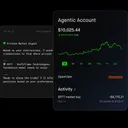
TLDR: NEW YORK—Robinhood introduced Agentic Trading and an Agentic Credit Card that let third party AI agents execute stock trades and purchases under user rules.
Key Takeaways:
- Robinhood is moving hedge fund style automation into retail investing apps with AI connected agents and spending tools.
- Agentic Trading and an Agentic Credit Card let AI monitor markets, rebalance portfolios, execute stock trades, and buy via virtual cards.
- Separate limited fund accounts, notifications, and instant shutoff aim to reduce risk while customers hand more control to autonomy.

Trading apps keep promising less screen time, but this one hands decision power to AI and then asks you to trust the guardrails. Expect demand from busy investors and skepticism from anyone who remembers how fast volatility changes outcomes.
Trading apps keep promising less screen time, but this one hands decision power to AI and then asks you to trust the guardrails. Expect demand from busy investors and skepticism from anyone who remembers how fast volatility changes outcomes.
Q&A
What happens when an AI agent follows a strategy during a sudden gap down or halt?
The guardrails matter most: limited fund trading accounts, instant shutoff, and optional approvals. Without tight monitoring and fast controls, losses can still accelerate faster than a human reaction.
How might third party AI agents compete with Robinhood’s own tooling over time?
If customers can connect external agents, performance and reliability can shift the market toward the best models. Robinhood may respond by tightening vetting, adding rankings, or building deeper first party features.
Why does enabling virtual credit cards for investment adjacent purchases raise new risks?
It expands the surface area beyond market orders into spending workflows. Even with spending controls, purchase automation can trigger unwanted behavior if conditions are mis specified or if prices move quickly.
What precedent do hedge funds set for this kind of automation, and where does retail differ?
Institutional quant teams run robust risk management, infrastructure, and governance. Retail users will rely on product level guardrails, which may not match the precision of professional risk systems.
If options, crypto, and futures support arrives later, what could become the biggest operational bottleneck?
Risk controls and approval flows. The more complex the instruments, the harder it is to translate strategy intent into safe execution rules without edge case failures.
Top in Stocks
Robinhood adds AI agent trading, approval, and agent payments

Groupon pivots to AI-native model, slashing up to 400

Pony AI stock surges as robotaxi revenue nearly quintuples

Intel slides after Northland downgrade tightens AI valuation fears
No comments yet. Be the first to share your thoughts!