
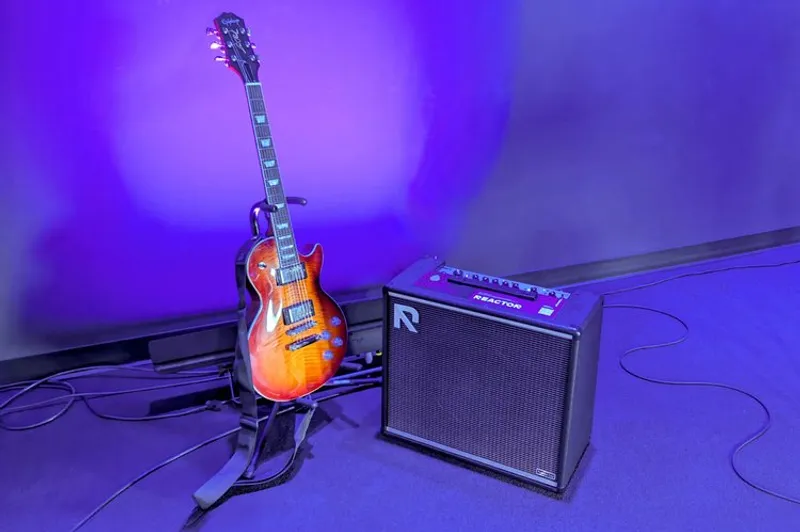
TLDR: Positive Grid REACTOR uses an app based AI tone assistant to generate playable rhythm and lead sounds from text, and delivers stage ready 50W or 100W volume. It is priced at $349 for 50W and $499 for 100W, with a $149 optional REACTOR Control foot controller.
Key Takeaways:
- Positive Grid built REACTOR after years of Spark practice amps, aiming it at gigs with a more robust stage friendly design and simpler workflow.
- Creator Hub AI can create multiple click to use tones from a sentence in about 10 seconds, plus Heat and Push Smooth response modes.
- AI tone generation cuts the fiddling barrier, but complex reverbs and proprietary delay and reverb algorithms do not translate perfectly every time.

It feels like Positive Grid finally gave practice amp energy a real stage engine. The payoff is speed and control, as long as you accept that not every boutique algorithm will translate into your prompt.
It feels like Positive Grid finally gave practice amp energy a real stage engine. The payoff is speed and control, as long as you accept that not every boutique algorithm will translate into your prompt.
Q&A
What happens if you stop using the REACTOR app after you build custom tones?
The amp is tightly app connected, so you lose the easiest path to editing, refining, and generating new tones, even though presets let you still play.
Why might advanced players still choose a traditional modeler or Kemper style rig?
The AI assistant shines for quick results, but the review suggests its best advantages tilt toward approachable tone dialing rather than deep expert level control.
How does the 25W and 1W power system change your rehearsal and recording routine?
You can rehearse loudly when needed, then drop to quieter modes without chasing a different tone, keeping amp feel closer to the real gig sound.
What does the AI limitation with multi reverb delay effects imply for future updates?
It hints that the tone engine works best for direct amp and standard effect chains, so improvements may focus on effect specific modeling rather than broad audio mimicry.
If your favorite sounds live in proprietary pedals, how should you adapt your expectations?
Treat AI as a starting point for similar vibes, then plan on manual tweaks or hybrid chains when the exact BlueSky style soundscape is the goal.
Top in Music

Lennon and McCartney find truce through Ballad song

Paul McCartney brings Dungeon Lane stories to Roundhouse

Gracie Abrams’ Tour Ticket Rush Starts June 5

Circle Jerks set September 2026 tour amid Keith Morris heat

No comments yet. Be the first to share your thoughts!