
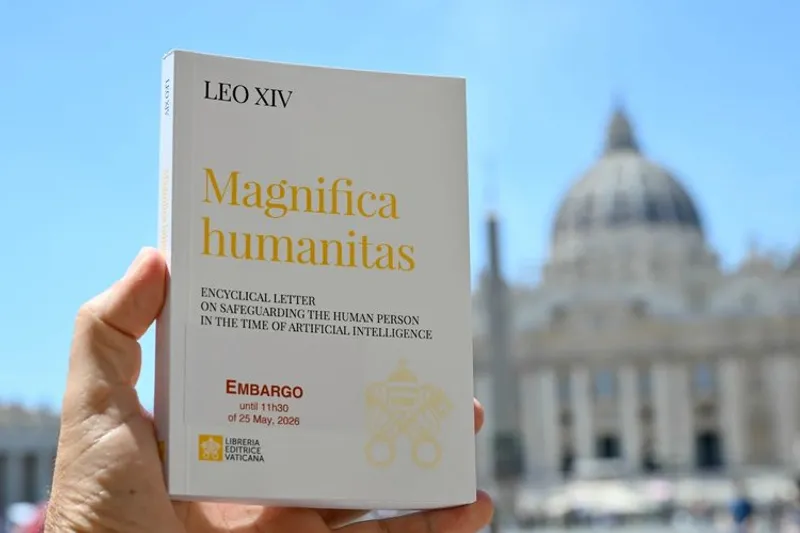
TLDR: VATICAN CITY—Pope Leo XIV released the encyclical Magnifica Humanitas on May 25, urging prudence, rigorous evaluation and sometimes a slower AI pace. It targets Trump era deregulatory speed, pressing governments to regulate before AI dehumanizes workers and deepens inequality.
Key Takeaways:
- Vatican leaders have long warned AI ethics issues, moving from 2020 industry agreements to Francis pushing a binding treaty.
- Magnifica Humanitas demands safeguarding human dignity through evaluation and even slower adoption, quoting AI risks to jobs and justice.
- The pope signals moral pressure for regulation, setting up a public clash with Trump administration plans to speed AI release.
- Leo builds on Pope Leo XIII themes by framing AI as a new industrial revolution tied to labor, inequality, and environmental harm.

The Vatican is doing what Washington keeps postponing: making AI speed sound like a policy choice, not a technical inevitability. Expect this encyclical to turn lab guardrails into a political litmus test, with Silicon Valley forced to answer to both profit and people.
The Vatican is doing what Washington keeps postponing: making AI speed sound like a policy choice, not a technical inevitability. Expect this encyclical to turn lab guardrails into a political litmus test, with Silicon Valley forced to answer to both profit and people.
Q&A
If governments embrace the encyclical’s moral language, what kind of concrete regulation will follow?
Even without policy details, the Vatican’s framing pushes lawmakers toward model evaluation, transparency rules, accountability requirements, and enforcement bodies that can slow deployments when harms appear.
Why does the encyclical avoid technical specs yet still threaten deregulatory momentum?
Moral principles can shape procurement and compliance expectations faster than technical debates, because institutions translate values into buying rules, risk thresholds, and liability standards.
What does the pope’s labor centered warning imply for AI industry job strategies?
It signals a coming focus on who benefits from productivity, meaning governments and unions are likely to demand retraining, worker protection, and clearer responsibility when displacement accelerates.
How could environmental concerns from AI data centers reshape AI policy debates?
If energy use and emissions become a central measure, regulators can require reporting, efficiency benchmarks, and location based constraints, changing incentives for where and how AI scales.
What historical precedent links church teaching to major US economic or social reforms?
Pope Leo XIII’s Rerum Novarum helped inspire New Deal thinking and mobilized Solidarity in Poland, suggesting moral arguments can later become policy architecture through political coalitions.
Top in Opinion
White House scaffolding reveals UFC Freedom 250 build
Poll Finds Americans Blaming Weakness and Trump Loyalty

Trump collides with Senate GOP after Cornyn loss
Pope Leo XIV warns AI could hollow human dignity

No comments yet. Be the first to share your thoughts!