
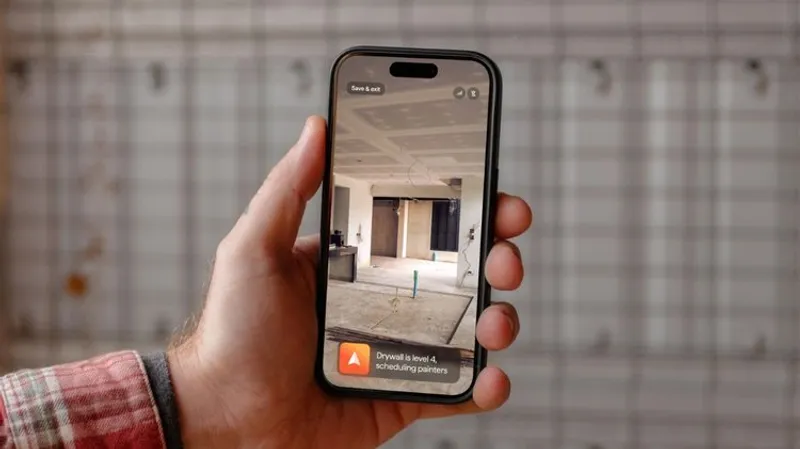
TLDR: Navigate.AI, launched by Opendoor co founder Eric Wu, uses an AI copilot with phone video and Meta AI smart glasses to train trades and flag quality issues. The move targets a US residential construction shortage of 723,000 workers that costs the industry $10.8 billion annually, including $8.1 billion in lost work and $2.7 billion in delays.
Key Takeaways:
- Background: A US residential construction labor shortfall of 723,000 workers hits timelines and budgets, costing $10.8 billion a year and worsening as experienced crews age out.
- Main fact: Navigate.AI raised $25 million and launched with four copilot functions, including AI upskilling and coaching plus AI quality control and AI project scoping.
- Meaning: Backed by Lennar, Tishman Speyer, and trade school pilots, the platform targets speed, safer onboarding, and right first time builds by coaching and verifying work from real videos.

In construction, “on the job training” usually means one rushed trainer and a lot of guesswork. Navigate.AI looks built to turn that pain into a permanent, measurable coach that follows crews, not just classrooms.
In construction, “on the job training” usually means one rushed trainer and a lot of guesswork. Navigate.AI looks built to turn that pain into a permanent, measurable coach that follows crews, not just classrooms.
Q&A
If AI catches defects early, will builders change how they measure contractor performance and warranty risk?
They likely will shift toward evidence based quality scoring from captured job footage, making defect rates and rework triggers easier to verify and dispute.
What happens when different crews use the same tool but follow different local practices?
Navigate.AI is positioned as a policy aware co pilot, so results should improve as models incorporate company standards and regional requirements rather than relying on one generic checklist.
Why start with training and coaching instead of only inspection and scoring?
Training tackles the root bottleneck, reducing repeated errors before they happen, while inspection then becomes a feedback loop that tightens standards on future jobs.
Could trade schools scale faster because AI reduces the trainer to student ratio problem?
Yes. The company cites that AI helps when one trainer cannot physically supervise 25 students at once, which can increase throughput without immediately hiring more instructors.
If AI helps construction become more efficient, how might that influence hiring and wages over time?
More productivity per worker can raise demand for skilled supervision, safety roles, and tech assisted trades, potentially expanding job pathways through reskilling rather than replacing jobs.
Top in AI

Amex innovation chief pushes agentic AI, demands real risk

Graduates boo AI pep talks as Schmidt gets heat

New Moms Return to AI Coding, Outpaced by Change
Google DeepMind’s WeatherNext sharpened Hurricane Melissa’s storm outlook
No comments yet. Be the first to share your thoughts!