
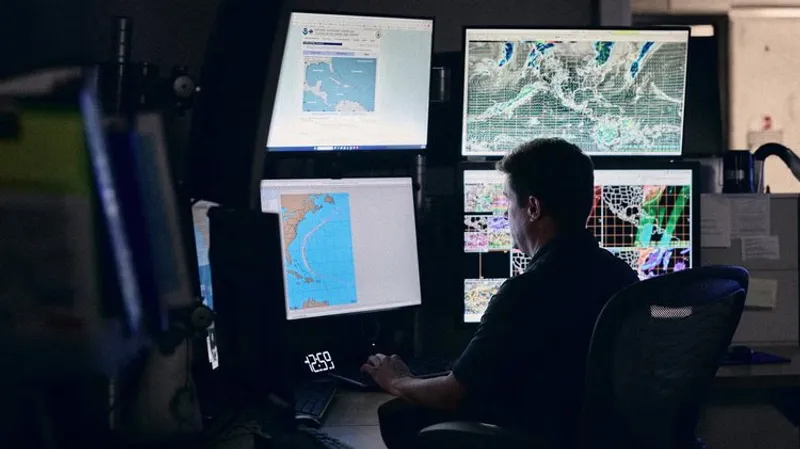
TLDR: JAMAICA—Google DeepMind WeatherNext predicted with 80 percent confidence that Hurricane Melissa would rapidly intensify to Category 5 and hit Jamaica, beating traditional uncertainty. The National Hurricane Center issued a record high intensity forecast that proved correct.
Key Takeaways:
- Hurricane Melissa’s path and strength looked uncertain days before landfall, pressing Jamaica and the National Hurricane Center for clearer signals.
- WeatherNext ran 50 scenarios every six hours last year, then moves to 1,000 futures every six hours, while predicting Melissa’s Category 1 to Category 5 jump.
- More stable AI guidance plus better data could improve warnings and reshape business planning, but extreme record weather remains a harder test.

Weather forecasting just stopped feeling like guesswork and started behaving like decision support. The scary part is how fast accuracy arrived, and how many lives depend on keeping that momentum.
Weather forecasting just stopped feeling like guesswork and started behaving like decision support. The scary part is how fast accuracy arrived, and how many lives depend on keeping that momentum.
Q&A
If AI forecasts can run thousands of futures every six hours, what stops forecasters from treating the output like certainty?
Meteorologists still need calibration and uncertainty communication, especially when the model confronts rare events beyond its training patterns.
Why did WeatherNext stay useful when traditional models hesitated about Melissa’s weakening and turning?
AI learns statistical atmosphere behavior from past data, so it can lock onto intensity trajectories that physical models may scatter under uncertain initial conditions.
What happens to warning effectiveness if AI predictions become more accurate but public trust lags behind?
The Melissa case suggests consistency matters. If forecasts change too often or language stays vague, the same accuracy can fail to translate into safer behavior.
How could more detailed balloon and satellite data reshape the weakest forecasts in less observed regions?
When observations fill gaps between coarse grid points, models gain grounding. That can shrink the error penalty that historically hit poorer countries hardest.
As AI weather guidance spreads to airlines, Uber, and utilities, who owns the accountability when recommendations misfire?
The operational question shifts from model accuracy to deployment governance, including validation, auditing, and clear responsibility between vendors and decision makers.




No comments yet. Be the first to share your thoughts!